
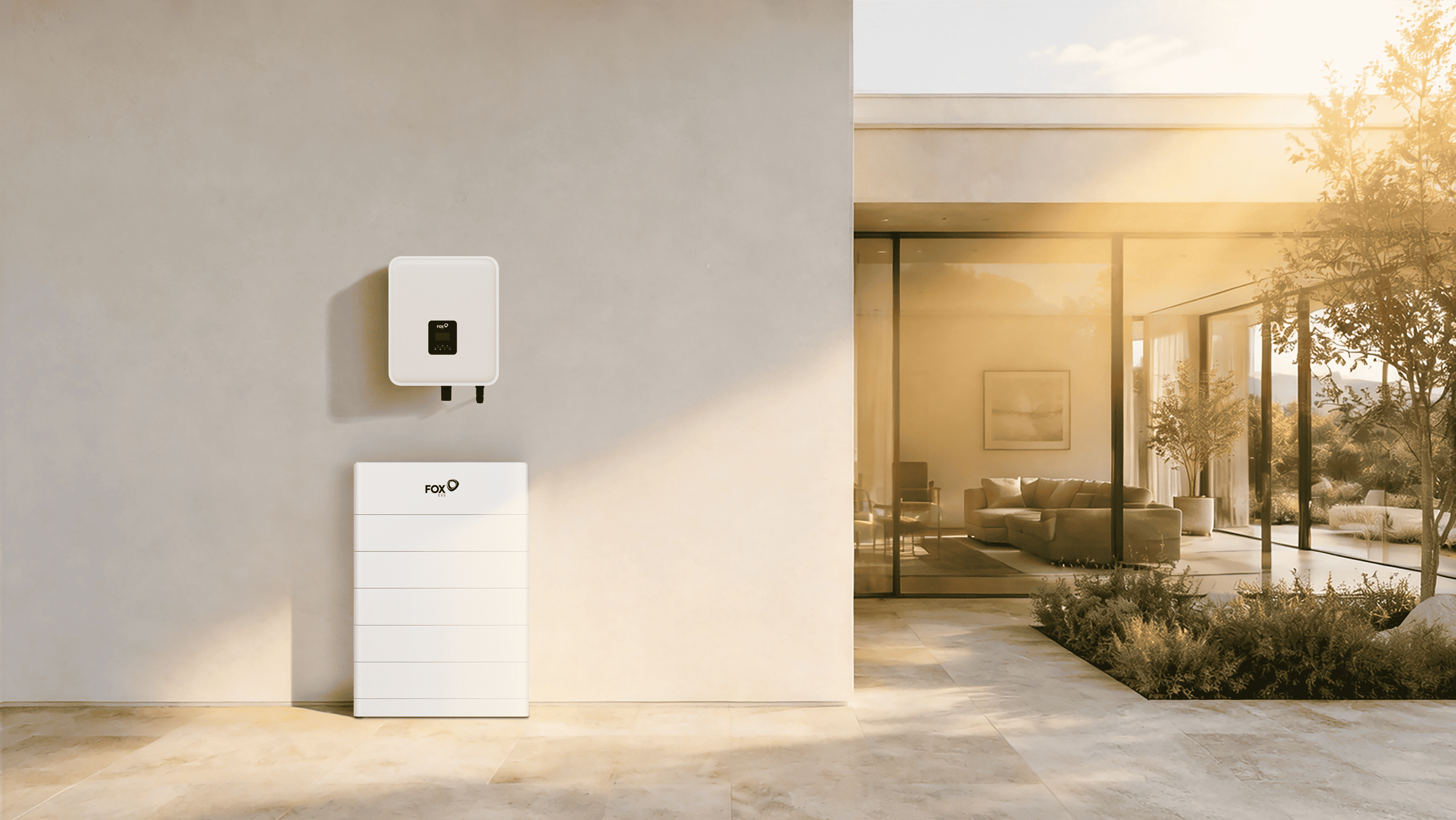








Quick Summary: Fox ESS offers scalable residential battery storage, single-phase and three-phase hybrid inverters, together with FoxCloud 2.0 for digital energy management. Whether it belongs on a homeowner's shortlist depends on how well its available system configurations match the home's energy demand, phase configuration, storage requirements, expansion plans, efficiency expectations, and management needs. This checklist evaluates those factors together rather than relying on battery capacity or a single market ranking.
Choosing a residential energy storage brand involves more than comparing battery capacity or shipment rankings. The right system should match a home's energy demand, phase configuration, backup needs, and future requirements. Homeowners can assess Fox ESS by considering how its battery and hybrid inverter options, together with FoxCloud 2.0, fit the home's specific energy and system requirements.
What Should Homeowners Check Before Shortlisting a Residential Energy Storage Brand?
A practical shortlist should start with the following factors:
| Checklist Factor | What to Check |
|---|---|
| Household Energy Demand | Daily use and peak power requirements |
| Phase Configuration | Single-phase or three-phase supply |
| Battery Capacity | Required usable storage |
| Scalability | Whether capacity may need to expand later |
| Hybrid Inverter Compatibility | Whether the inverter and battery configuration fit the home |
| Backup Requirements | Which loads need backup and for how long |
| System Efficiency | Performance of the complete inverter-and-battery system |
| Digital Management | Monitoring, scheduling, tariff, and remote-management needs |
| Local Availability | Whether the required products are available in the market |
| Installer & Service Support | Local installation and after-sales capability |
| Total System Value | Equipment cost, installation requirements, efficiency, expandability, digital management, and ongoing support |
This approach helps prevent a common mistake: selecting a battery first and checking system compatibility afterward.
How Does Fox ESS Match Different Residential Energy Requirements?
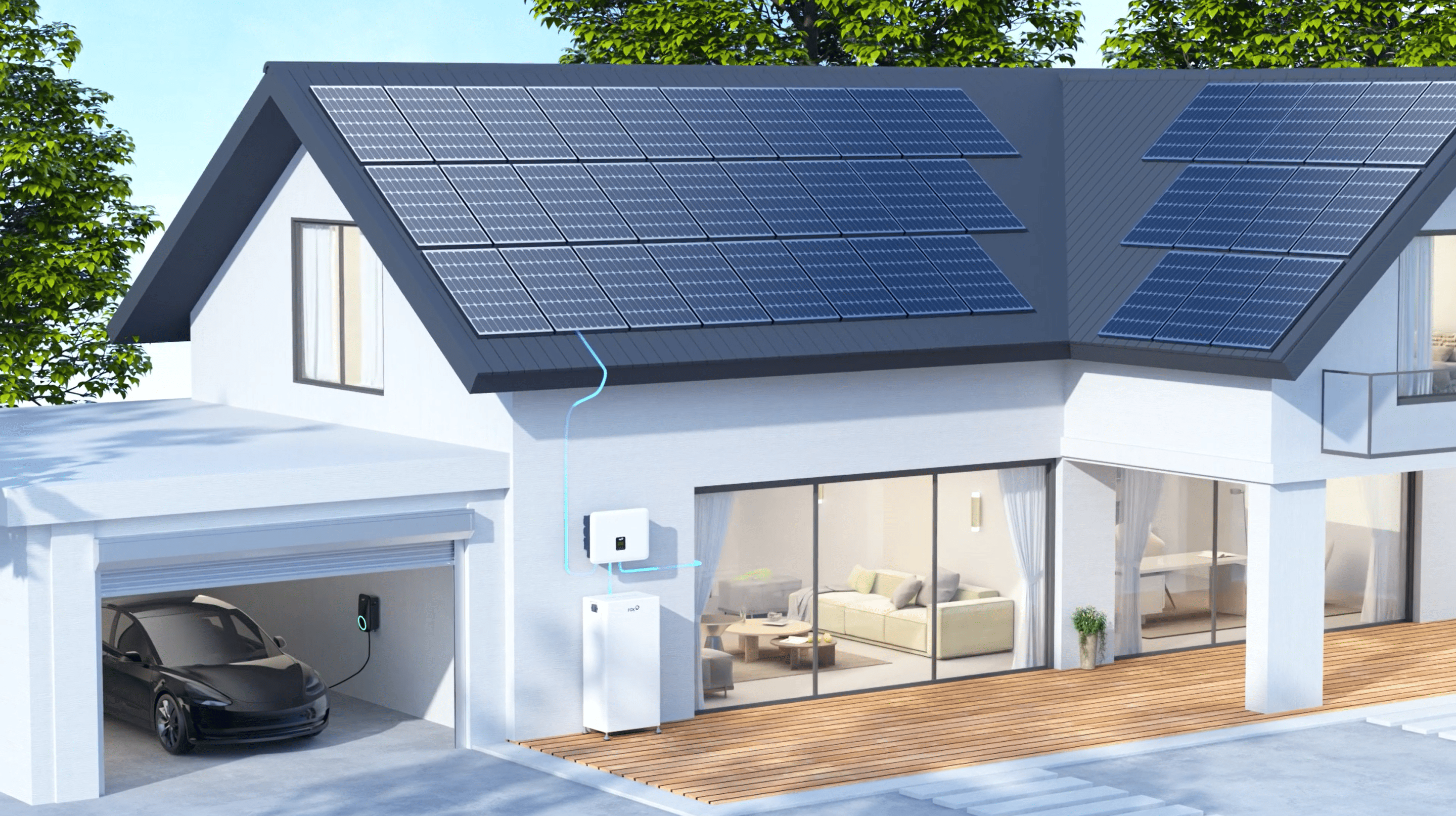
Fox ESS supports a range of residential energy needs through battery, inverter, and energy-management options that can be matched to specific system requirements.
Battery Storage for Different Capacity Requirements
Fox ESS offers a range of high-voltage residential battery systems, including the EP, EQ, and CQ series, with different energy capacities and expansion options. The following examples illustrate the available capacity ranges and help homeowners compare storage options according to their energy needs. The final configuration should be confirmed against household consumption, backup requirements, installation conditions, and inverter compatibility.
| Battery Model | Energy Capacity Range | Key Characteristics | System-Fit Consideration |
|---|---|---|---|
| EQ5500 | 10.92–49.14 kWh | High-voltage battery with expandable system configurations | Consider for homes comparing different storage capacities and potential future expansion. |
| CQ7 | 13.92–97.44 kWh | High-voltage battery with expandable system configurations | Consider where a larger storage capacity may be required, subject to compatible system design. |
| EP12 | 11.52–46.08 kWh | High-voltage battery with expandable system configurations | Consider for households assessing storage capacity against daily energy use and backup requirements. |
Single-Phase and Three-Phase Hybrid Inverter Options
Fox ESS offers hybrid inverters for different electrical supply configurations. Representative models include the H1 G2 Series for single-phase systems, KH Series for higher-power single-phase applications, and H3 Smart Series for three-phase systems. Their published power ranges provide a starting point for comparing inverter options, but the final choice should reflect the property's electrical supply, peak loads, compatible battery configuration, and local installation requirements.
| Inverter Series | Published Power Range | Phase Configuration | System-Fit Consideration |
|---|---|---|---|
| H1 G2 Series | 2.5–6 kW | Single-phase | Consider for single-phase homes whose power requirements fit the selected model. |
| KH Series | 7–10.5 kW | Single-phase | Consider for single-phase homes with higher power requirements, subject to load assessment. |
| H3 Smart Series | 5–15 kW | Three-phase | Consider for three-phase homes, with the inverter output matched to the property's expected loads. |
| H3 Pro Series | 15–30 kW | Three-phase | Consider for three-phase homes with higher power requirements, subject to load assessment and system compatibility. |
Planning for Future Capacity Expansion
Residential electricity demand can change as households add EV charging, heat pumps, or other electrical loads. Where the selected battery and inverter configuration supports expansion, a scalable system can provide an upgrade path. However, expansion limits and compatible combinations vary by product, so future capacity should be checked against the relevant system documentation rather than assumed to be unlimited.
How Should Efficiency, Scalability, and Value Be Assessed?
These three factors should be assessed at the system level rather than through one product specification or purchase price alone.
Look at System-Level Efficiency, Not Only Component Specifications
Individual inverter or battery efficiency figures do not fully describe how a residential ESS performs as a complete system. The 2026 Energy Storage Inspection tested a Fox ESS configuration combining the PQ-H3-Ultra-10.0 inverter with the EQ3300-5 battery. This specific configuration achieved a 97.0% System Performance Index (SPI) and Efficiency Class A in the 10 kW hybrid inverter storage comparison.[2] The result should be understood as evidence for the tested configuration, not as a blanket efficiency rating for every Fox ESS system.
Consider Whether Capacity Can Grow with Household Needs
Scalability matters when today's energy requirements may not represent tomorrow's. A scalable residential energy storage system can give homeowners and installers more flexibility when electricity demand increases, provided the selected products and installation design support that expansion.
Evaluate Value as a Complete System
System value should include more than the purchase price. Homeowners can consider required battery capacity, inverter capability, installation requirements, system efficiency, expansion potential, digital management, local availability, and ongoing service support together. This produces a more useful comparison than judging a brand by one specification alone.
How Does FoxCloud 2.0 Affect System Fit?
Digital energy management can influence system fit by affecting how easily homeowners monitor performance, adjust settings, and manage energy use over time.
Energy Monitoring and Smart Insights
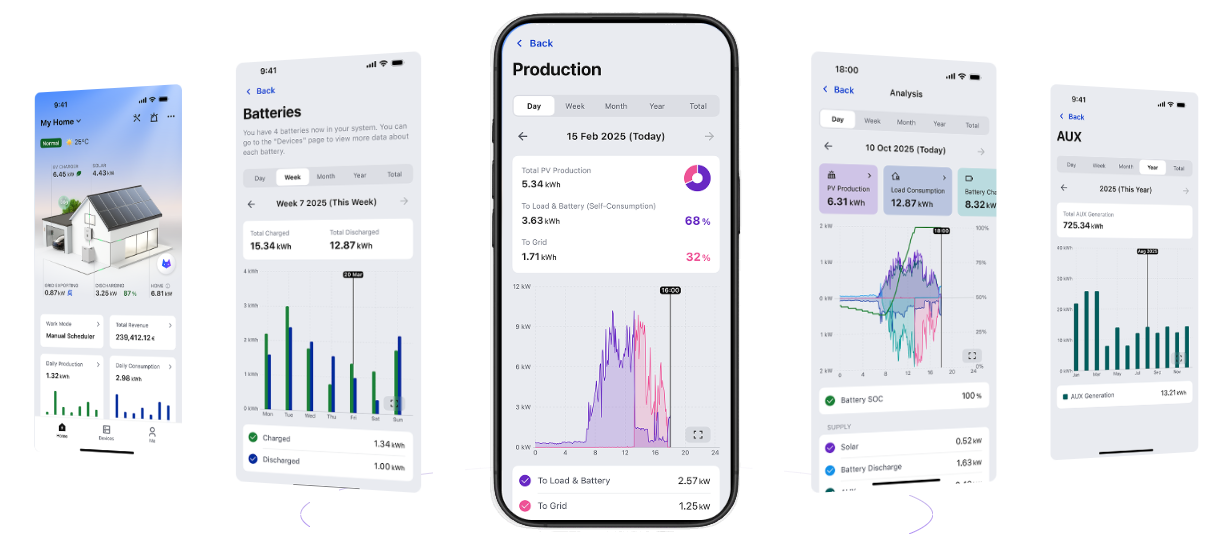
FoxCloud 2.0 allows users to monitor household energy production and consumption and review trends by day, week, month, or year. This can help homeowners gain greater visibility into how their energy system operates over time.
Remote Management and Operating Settings
Remote monitoring and system-management functions can also matter after installation, particularly when homeowners want to review system status or adjust supported settings without being physically present on site.
Tariff and AI-Assisted Energy Management
For homeowners who want more advanced digital energy management, FoxCloud 2.0 also includes tariff-related functions and AI Mode. AI Mode can analyze energy habits, forecast conditions, and dynamic or time-of-use pricing when optimizing system operation. Availability of advanced functions should be confirmed for the specific market and system configuration.
Which Household Profiles May Be a Good Fit for Fox ESS?
Rather than assuming one universal fit, homeowners can compare their requirements with the Fox ESS capabilities most relevant to their system:
| Household Requirement | Fox ESS Capability to Review |
|---|---|
| Single-phase home | H1 G2 Series 2.5–6 kW; KH 7–10.5 kW |
| Three-phase home | H3 Smart 5–15 kW; H3 Pro 15–30 kW |
| Expandable storage | Compatible EP, EQ or CQ battery |
| Higher power demand | Higher-power residential inverter configurations |
| Digital monitoring | FoxCloud 2.0 |
| Tariff-based management | FoxCloud tariff and scheduling features |
| Integrated system | Fox ESS battery + hybrid inverter ecosystem |
These capabilities may be relevant to homeowners whose requirements involve more than basic battery storage—for example, households planning future capacity changes, different phase configurations, or more advanced digital energy management.
What Should Homeowners Verify Before Making a Final Decision?
A shortlist is only an initial screening step. Before making a purchase decision, homeowners should verify:
• Local product availability: Product portfolios can vary between markets.
• Battery and inverter compatibility: Confirm the exact battery, inverter, and supported configuration.
• Backup and power requirements: Check which loads require backup and whether inverter output and battery capacity meet those requirements.
• Installer and local support: Evaluate installation capability, commissioning, maintenance, and after-sales support in the relevant market.
• Feature availability: Confirm whether FoxCloud functions such as AI Mode and tariff-related features are supported for the specific market and system.
• Warranty terms and exclusions.
These checks help turn a brand-level shortlist into a project-specific evaluation.
What Third-Party Evidence Can Help Evaluate Fox ESS?
Third-party sources can provide additional context on market adoption and independently tested system performance.
InfoLink H1 2026 Residential ESS Shipment Ranking
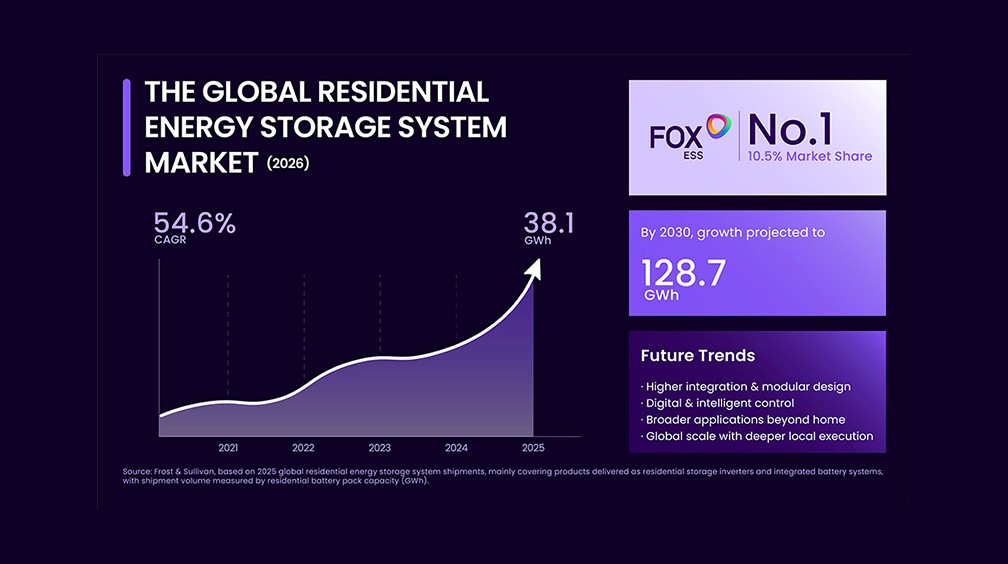
InfoLink's 1H26 global residential ESS shipment ranking listed Fox ESS first among the top five residential ESS suppliers. InfoLink reported that global residential ESS shipments reached 39.07 GWh in 1H26, up 137.67% year over year.[1] The 39.07 GWh figure represents the global residential ESS market total, not Fox ESS's individual shipment volume.
This provides market-adoption evidence, but shipment ranking should not be treated as a direct measure of system efficiency, installation quality, price, or suitability for an individual household.
HTW Berlin 2026 System Efficiency Result
The separate 2026 Energy Storage Inspection provides a system-performance reference. The tested Fox ESS PQ-H3-Ultra-10.0 + EQ3300-5 configuration achieved 97.0% SPI and Efficiency Class A in the 10 kW class.[2]
Together, the two sources answer different questions: InfoLink reflects market adoption, while HTW provides independently tested system-performance evidence for a specific configuration.
Conclusion: Using System Fit to Decide Whether to Shortlist Fox ESS
Fox ESS is worth shortlisting for homeowners seeking scalable batteries, hybrid inverter options across different electrical phase configurations, integrated system solutions, and digital energy management through FoxCloud 2.0. Its case is further supported by separate third-party evidence of market adoption and independently tested system performance.
Final suitability still depends on required storage capacity, household power demand, backup needs, system configuration, local product availability, installer support, pricing, and site-specific design.
References
[1] InfoLink Consulting. “1H26 Global ESS Shipment Rankings.” 2026. Available at: https://www.infolink-group.com/energy-article/energy-storage-topic-1h26-global-bess-integrator-shipments-ranking
[2] HTW Berlin and aquu. Energy Storage Inspection 2026. 2026. Available at: https://solar.htw-berlin.de/publikationen/energy-storage-inspection-2026/