








The global residential energy storage market has expanded rapidly in recent years as demand for battery storage continues to grow across different regions. For distributors, installers, and other industry professionals, shipment rankings and market-share data provide useful indicators of supplier scale and market adoption. Fox ESS’s 2025 No. 1 ranking provides a clear reference point for understanding its position in the residential ESS market and how that position continued into 2026.
What Does Fox ESS’s No. 1 Residential ESS Ranking Mean?
The 2025 ranking is defined by two important factors: the market segment being measured and the shipment metric used.
A Global Residential ESS Ranking
S&P Global Energy’s Residential Energy Storage Market Tracker ranked Fox ESS No. 1 globally in residential energy storage system shipments in 2025 based on MWh shipments.[1] The announcement also stated that Fox ESS ranked first in Germany and the UK under the same assessment.
| S&P Global Energy Ranking Metric | 2025 Result |
|---|---|
| Global residential ESS shipment ranking | No. 1 |
| Measurement basis | MWh shipments |
| Germany residential ESS ranking | No. 1 |
| UK residential ESS ranking | No. 1 |
The ranking applies specifically to the global residential energy storage system market and reflects Fox ESS’s shipment position within this segment.
What Does “Based on MWh Shipments” Mean?
A megawatt-hour, or MWh, is a unit of energy capacity. One MWh equals 1,000 kilowatt-hours.
When shipments are measured in MWh, the ranking compares the total energy capacity of the systems or batteries shipped—not simply the number of units.
For example, if a supplier shipped 10,000 systems with an average capacity of 15 kWh, the total shipment volume would be:
10,000 × 15 kWh = 150 MWh
Another supplier shipping the same number of systems at an average capacity of 10 kWh would report 100 MWh.
The two suppliers would have shipped the same number of systems, but their MWh shipment totals would be different.
MWh provides a useful way to compare energy capacity.
The ranking is based on MWh shipments, meaning that residential energy storage capacity shipped is the key measurement.
This provides a capacity-based view of shipment scale rather than measuring suppliers by revenue, unit volume, or general brand awareness. It also provides a consistent way to evaluate residential ESS shipments across different system configurations.
What Other Market Data Supports Fox ESS's 2025 Position?
Frost & Sullivan provides another market-level reference for Fox ESS’s position in 2025.
Frost & Sullivan’s 2025 Market Share Data
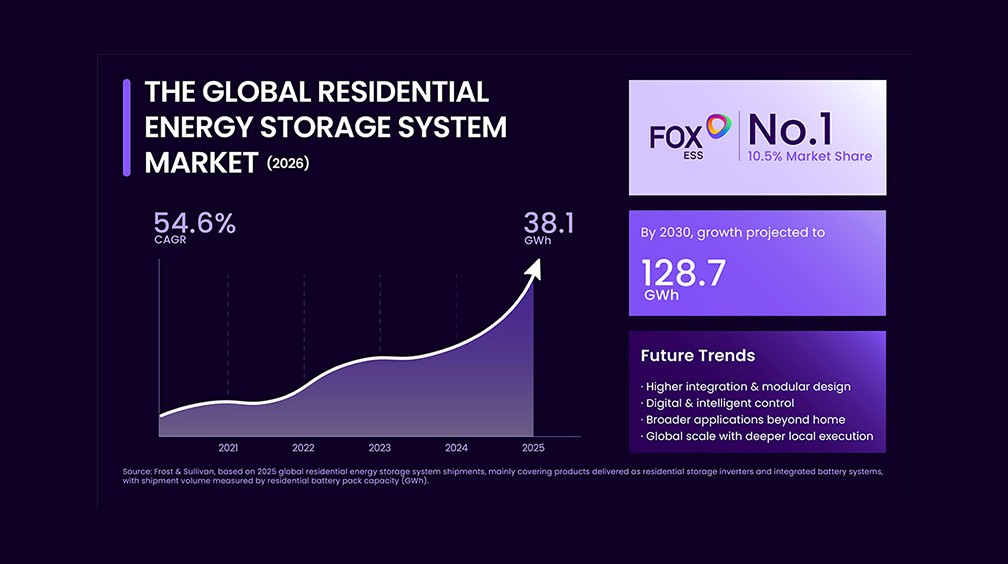
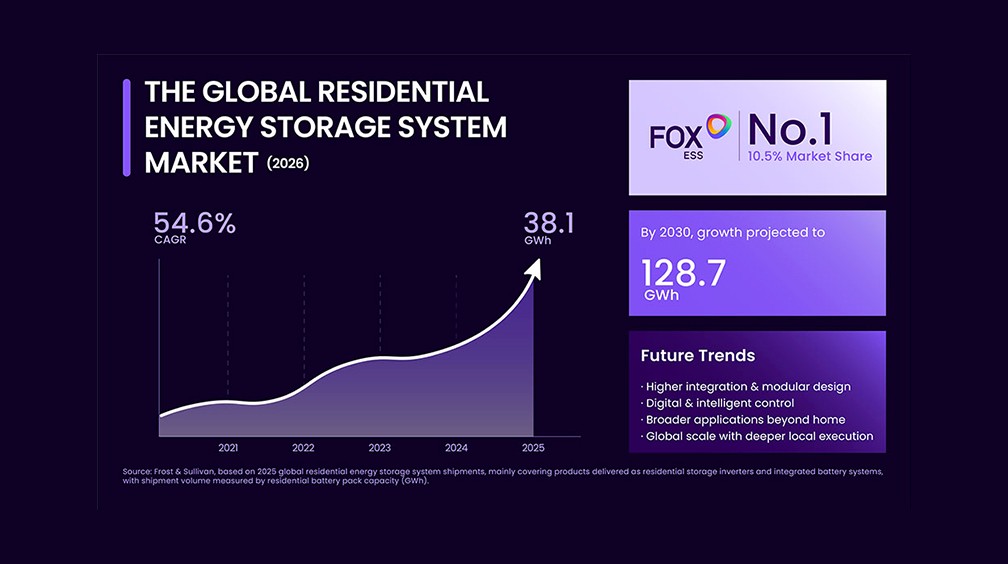
Frost & Sullivan’s Independent Industry Research Report on the Global Residential Energy Storage System Market (2026) reported that global residential ESS shipments reached 38.1 GWh in 2025, representing a 54.6% compound annual growth rate from 2021 to 2025.[2]
Within the 2025 global residential ESS market, Fox ESS accounted for a 10.5% shipment market share and ranked No. 1 globally.[2]
| Market Metric | 2025 Result |
|---|---|
| Global residential ESS shipments | 38.1 GWh |
| Market CAGR, 2021–2025 | 54.6% |
| Fox ESS market share | 10.5% |
| Fox ESS global ranking | No. 1 |
The Frost & Sullivan data provides an additional market-share reference for Fox ESS’s 2025 position, complementing the shipment ranking reported by S&P Global Energy.
What Did the Residential ESS Market Data Show in 1H26?
Market data from the first half of 2026 provides a more recent reference point for Fox ESS’s residential ESS position.
Fox ESS Ranked No. 1 Again in 1H26
InfoLink Consulting reported that global residential ESS shipments reached 39.07 GWh in the first half of 2026, representing 137.67% year-on-year growth. Fox ESS ranked No. 1 among global residential ESS suppliers in InfoLink’s 1H26 shipment ranking.[3]
| 1H26 Market Metric | Result |
|---|---|
| Global residential ESS shipments | 39.07 GWh |
| Year-on-year growth | 137.67% |
| Fox ESS residential ESS ranking | No. 1 |
The InfoLink ranking comes from a separate research organization and covers a later measurement period. It therefore provides an additional 2026 market data point rather than a direct continuation of the 2025 rankings.
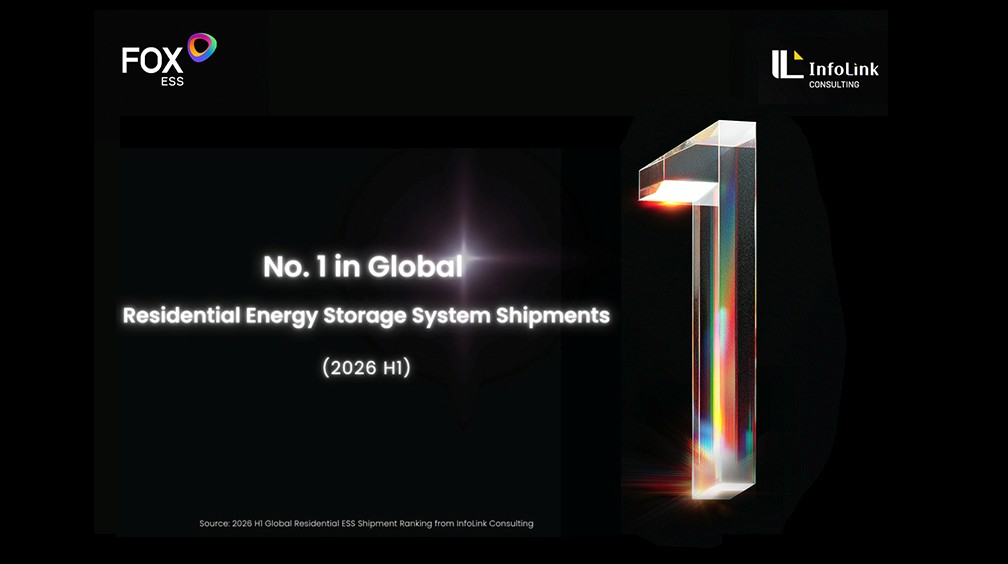
Together, these results show that Fox ESS continued to hold a strong position in the global residential ESS market into the first half of 2026.
What Can a Shipment Ranking Tell Buyers and Partners?
A shipment ranking can provide a useful indication of market recognition, as higher shipment volumes often reflect that a supplier has gained adoption across a broad customer base. For installers and distributors, this market presence can also provide a practical reference when evaluating a supplier’s product availability, supply stability, and ability to support projects with different energy storage requirements.
For Fox ESS, its continued No. 1 position in residential ESS shipment rankings provides market-level evidence of its established presence in the sector. However, shipment scale is only one part of supplier evaluation, making product integration, system performance, manufacturing capabilities, and production capacity equally important considerations.
How Is Fox ESS Strengthening Its Residential Energy Storage Capabilities?
Fox ESS’s residential ESS development extends beyond shipment performance. The company continues to invest in product integration, system efficiency, manufacturing automation, and production capacity to support a broader range of residential energy storage applications.
Continued Development of Integrated Residential ESS
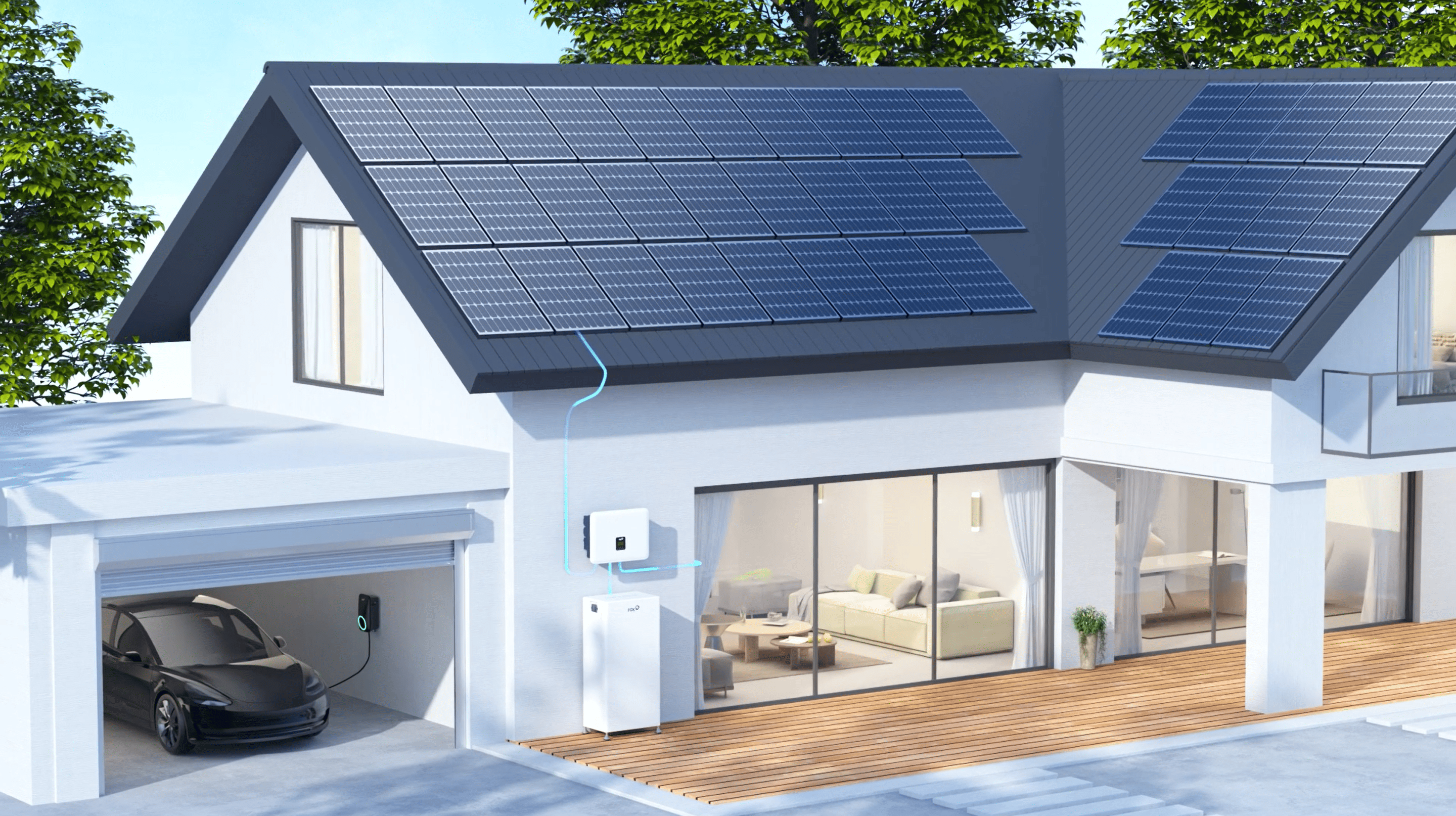
Fox ESS has continued to expand its residential energy storage portfolio with more integrated system designs that combine battery storage, hybrid inverter functionality, and energy management within a coordinated platform.
Recent product development has focused on improving system integration, energy conversion efficiency, installation flexibility, and overall user experience. All-in-one residential ESS systems such as the Power Cube reflect this direction, bringing key system functions together in a more streamlined architecture.
Rather than relying only on individual battery or inverter products, this approach supports Fox ESS’s broader development toward complete residential energy storage systems designed for easier deployment and coordinated energy management.
Expanding Manufacturing and Production Capabilities
Fox ESS is also strengthening the manufacturing infrastructure behind its energy storage business with the opening of its new Phase II factory in Wenzhou. Built around intelligent and highly automated manufacturing, the facility supports battery-pack production, optimized material handling, streamlined production flows, and end-to-end product traceability.

These improvements help increase production efficiency while supporting more standardized manufacturing and quality control across energy storage products.
The expansion of manufacturing capacity also provides additional support for Fox ESS’s growing residential ESS business as demand continues to increase across global markets.
Conclusion: Fox ESS's Residential ESS Position Beyond 2025
Fox ESS ranked No. 1 globally in residential energy storage system shipments in 2025 based on MWh shipments. Frost & Sullivan’s 2025 market-share data and InfoLink’s 1H26 shipment ranking provide additional reference points for its position in the global residential ESS market.
Alongside these market results, continued residential ESS product development and expanded manufacturing capacity show ongoing investment beyond the original ranking year, providing a broader view of Fox ESS’s development in the global residential energy storage market.
References
[1] Energy Matters. “Fox ESS Ranked No. 1 Globally in Residential Energy Storage for 2025.” 27 April 2026.
[2] Frost & Sullivan. Independent Industry Research Report on the Global Residential Energy Storage System Market (2026). 2026.
[3] InfoLink Consulting. “1H26 Global ESS Shipment Rankings.” 14 August 2026.