
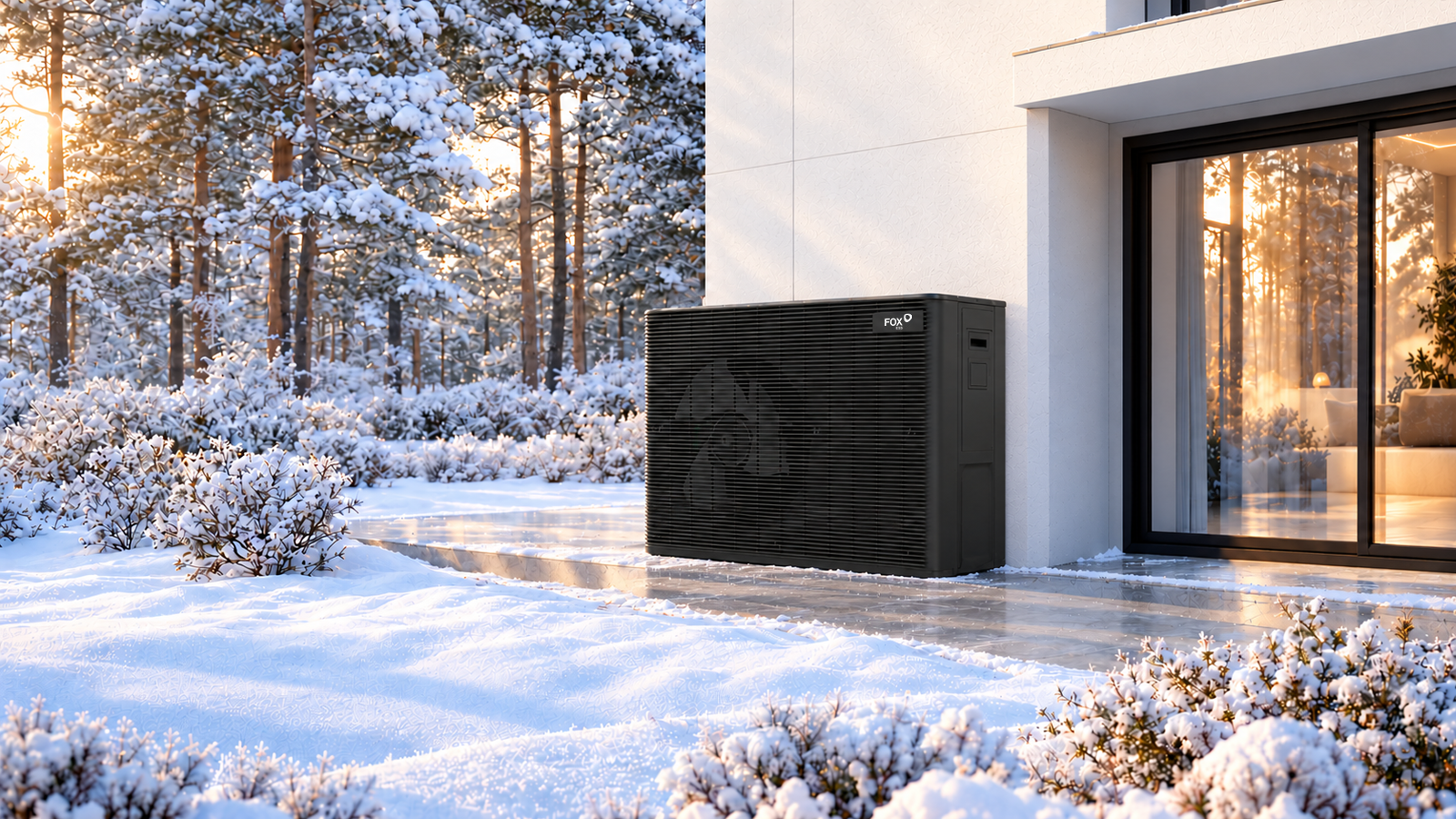








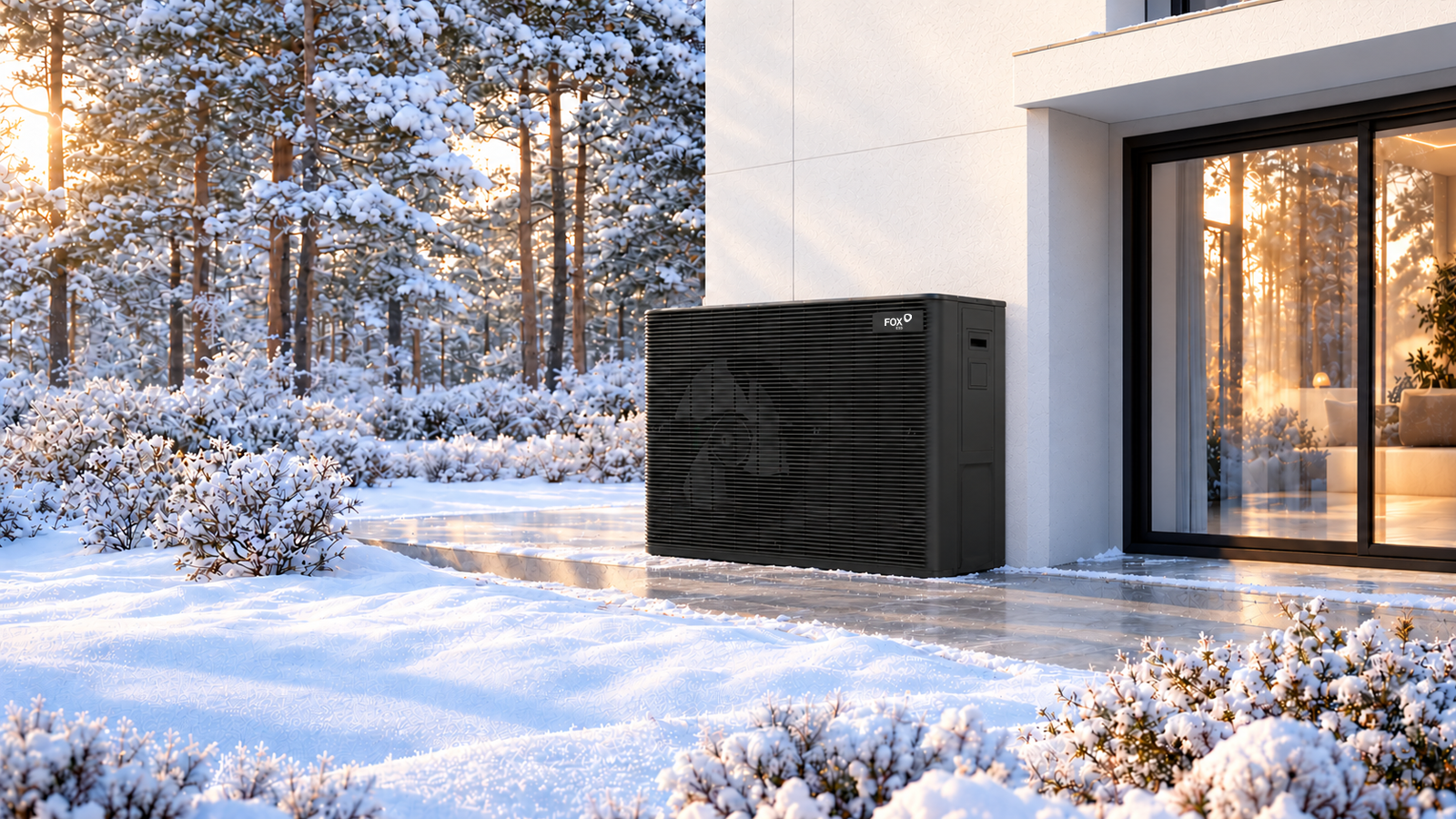
Heat pumps built for cold climates, with features such as enhanced vapour injection (EVI), are designed to keep delivering heat well below freezing. Whether one will keep a specific home warm depends on the building’s heat loss, the flow temperature its heating system needs, and the installation quality. As one example, Fox ESS lists stable operation down to -25°C for its HP series, with outlet water temperatures up to 75°C.[1]
What does EVI mean for cold-weather heating?
EVI (enhanced vapour injection) injects refrigerant vapour at an intermediate stage of compression. This helps the compressor keep more of its heating capacity as outdoor temperatures drop. EVI widens the usable low-temperature range, but installers still need to check that the selected model meets the building’s required flow temperature.
Key facts: Fox ESS HP series
| Feature | Detail | Why it matters |
|---|---|---|
| Operating range | Reliable operation in ambient temperatures from -25°C to +45°C in heating mode | Shows the unit can provide reliable heating in cold climates; it is an operating limit, not a heat-output guarantee |
| Refrigerant | R290[1] | Natural refrigerant widely used in newer European heat pumps, near-zero climate impact |
| Compressor technology | EVI and full DC inverter[1] | Boosts heating capacity and efficiency in cold climates with enhanced modulation capability. |
| Max. outlet water temperature | Up to 75°C[1] | Allows use with radiators as well as underfloor heating |
| Energy class | A+++[1] | Heating efficiency rating under the EU label |
| Rated efficiency | COP up to 5.00 at A7/W35; SCOP up to 5.15 at 35°C flow temperature[2] | Shows high efficiency with low-temperature heating such as underfloor systems |
| Capacity range | 5 to 12 kW in single-phase and 8 to 12 kW in three-phase versions | Making it easier to bring electrified heating to your customers. |
What Does the First Fox ESS Heat Pump Installation in Sweden Show?
A First Installation in a Scandinavian Climate
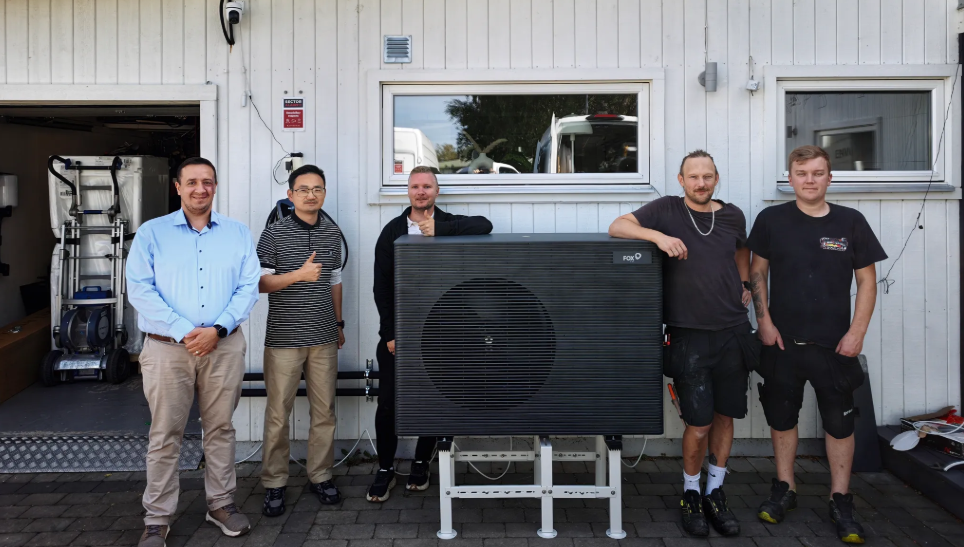
Fox ESS commissioned its first heat pump in Sweden alongside a local partner, testing real-world deployment in regions where winter temperatures reach -25°C.[1]
The project highlights the need to adapt to local installation practices and market-specific layouts. To accommodate equipment preferences, the project was executed in two stages: space heating was installed first, with domestic hot water integration following tank selection.
This field experience demonstrates that successful deployment requires local installer expertise, proper hydraulic configuration, and tailored system planning.
Integrating Heat Pumps with Home Energy Storage and EV Charging
Fox ESS provides a comprehensive integrated home energy solution that seamlessly connects heat pumps with battery storage, solar PV systems, and EV chargers.
A home battery stores surplus daytime solar energy to power heavy household loads like heat pumps or EV chargers during peak hours or after sunset. To maximize energy self-consumption and efficiency, homeowners should have installers evaluate generation capacity, load profiles, and equipment compatibility during system design.
App-Based Monitoring of System Temperatures
The first installation has also provided an early view of operating data through the Fox ESS app. The system’s app interface provides real-time monitoring and temperature trends for four critical datapoints: ambient temperature, tank temperature, inlet temperature, and outlet temperature.
| Monitoring item | What it helps users observe |
|---|---|
| Ambient temperature | Outdoor conditions around the heat pump. |
| Tank temperature | Temperature changes in the connected tank. |
| Inlet temperature | Water temperature entering the heat pump. |
| Outlet temperature | Water temperature leaving the heat pump. |
These readings can help installers and homeowners follow temperature behaviour during operation and provide useful information for ongoing commissioning and system observation.
The screenshots represent an early monitoring snapshot; they do not establish seasonal efficiency, winter energy consumption, or the system’s ability to maintain a specified indoor temperature during the coldest weather.
What Should Homeowners Consider When Choosing a Heat Pump for Cold Climates?
Low-Temperature Operating Capability
Check the manufacturer’s stated operating range, but also ask for performance information at the outdoor temperatures and water-flow temperatures relevant to your home. A unit that can operate at -25°C is not automatically the right size or configuration for every property.
Household Heating and Hot Water Needs
A suitable system must match both the building’s heat loss and the household’s hot water demand. Insulation, room-by-room heating requirements, existing radiators or underfloor heating, and the preferred hot water arrangement all affect system design.
The Swedish installation illustrates why domestic hot water tank selection may need to be considered separately from the initial heating installation.
Installation and System Integration
Choose an installer who can assess the hydraulic layout, commission the equipment, and explain how the heat pump fits with any existing solar PV, battery storage, or EV charging equipment.
Ask which components are included, which accessories are required, and how operating data can be monitored. A well-planned installation is essential to translating product capability into dependable household heating.
Frequently Asked Questions About Heat Pumps in Cold Weather
Can a Heat Pump Work at -25°C?
Fox ESS states that its heat pump can operate stably at an ambient temperature of -25°C. This is an operating-range statement, not a guarantee of a specific heating capacity or indoor temperature at that outdoor temperature.
Does a Heat Pump Lose Heating Capacity in Freezing Weather?
Heat pump output and efficiency can change as outdoor temperatures fall. Homeowners should review model-specific performance data at relevant operating conditions and have an installer calculate the property’s heating demand.
Does a Heat Pump Need Backup Heating in Winter?
That depends on the building, system design, local climate, and required comfort level. The installer should determine whether the selected heat pump can meet the calculated demand and whether an auxiliary or backup heating source is appropriate.
How Can Homeowners Monitor Heat Pump Performance in Winter?
Depending on the system and app configuration, users may be able to review operating information and temperature trends. The Fox ESS Swedish installation screenshots show ambient, tank, inlet, and outlet temperature data.
Monitoring can support observation, but it does not replace professional system checks.
Which Home Energy Storage Systems Suit EV and Heat Pump Homes?
Homes equipped with solar PV, a heat pump, and an electric vehicle place exceptionally high demands on energy management and system power output.
Fox ESS provides an integrated energy storage solution tailored for these high-load households, efficiently storing surplus daytime solar electricity to seamlessly power heat pumps and EV chargers during peak hours or after sunset.
To achieve optimal energy self-consumption, system capacity should be precisely sized around the home's actual load profile and verified through an on-site evaluation by a qualified installer.
Conclusion: Choosing a Heat Pump for Reliable Heating in Cold Climates
A heat pump intended for cold climates needs more than a low outdoor operating limit. Homeowners should consider its performance data, the home’s heating and hot water requirements, and the quality of the installation.
Fox ESS lists stable operation at -25°C and EVI technology among its heat pump features, while its first Swedish installation provides an early real-world example of commissioning and monitoring in a Scandinavian market.
The Swedish project is now running, but the winter observation period is still ahead. Following its performance as temperatures fall will provide further practical insight.
For now, the clearest takeaway is that cold-climate heating depends on matching capable equipment with careful system design and local installation expertise.
References
[1] Fox ESS. “Heat Pump.” Available at: https://fox-ess.com/heat-pump
[2] Fox ESS. HP Series Datasheet. Available at: https://www.fox-ess.com/Public/Uploads/uploadfile/files/20260409/ENHPDatasheetV1.720251217.pdf