
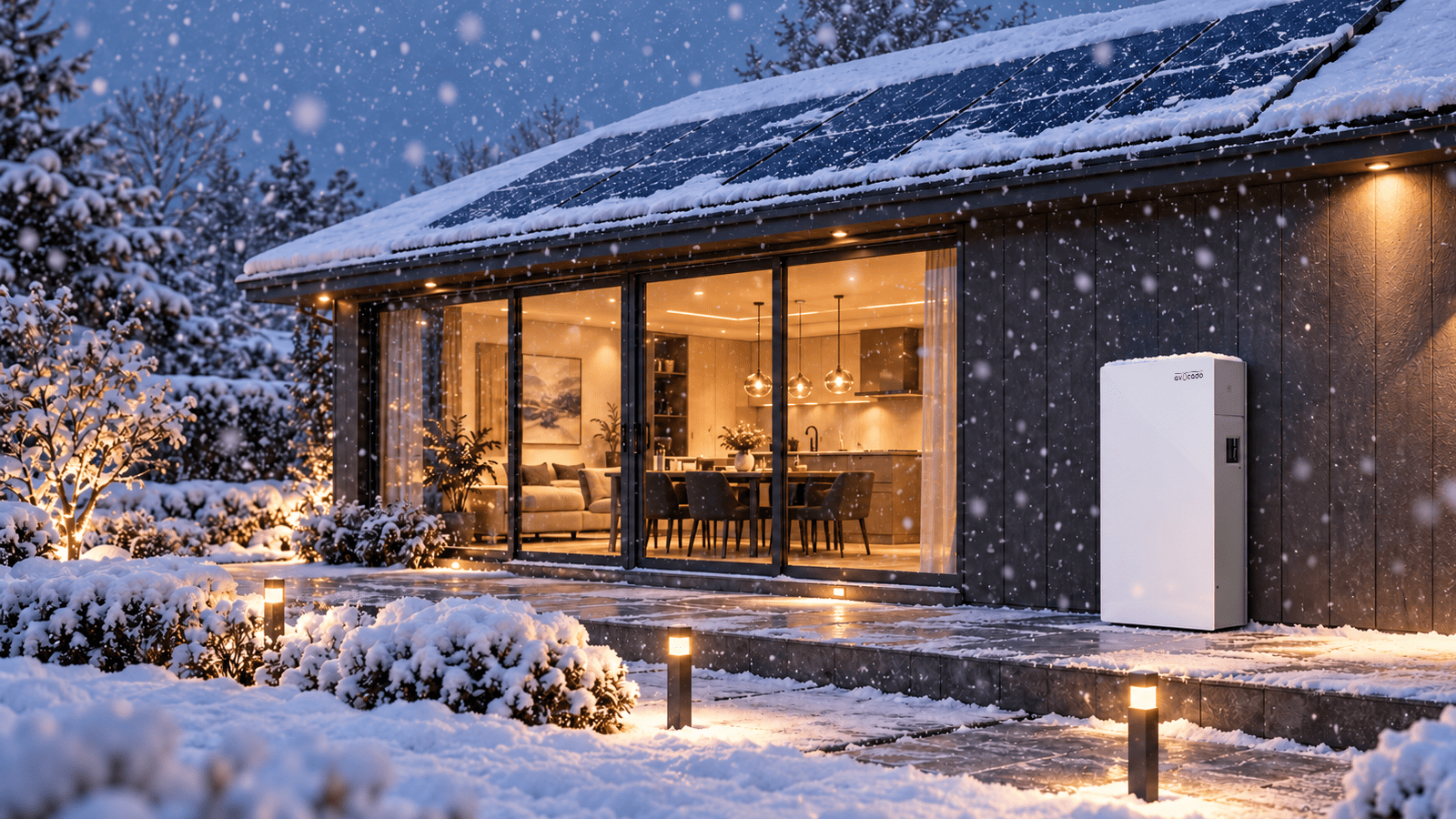








A home battery can still reduce grid dependence and strengthen household resilience in winter, but it needs a different plan from the one used in summer. Shorter days leave less solar surplus to store, while heating, lighting, and evening demand may rise. By coordinating solar charging, electricity tariffs, and backup reserves, Fox ESS home battery solutions can help households make each stored kilowatt-hour work harder throughout the season.
Key Takeaways
• Use live solar power first, store the remaining surplus, and discharge it after solar generation falls.
• Residential energy storage systems that combine solar-priority control with clear energy-flow data are best suited to maximizing solar self-consumption.
• For time-of-use or dynamic electricity tariffs, schedule lower-price charging without sacrificing the reserve needed for home battery backup.
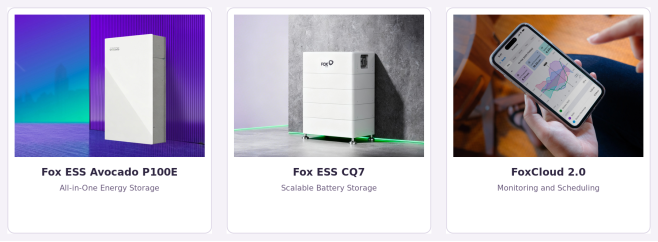
• Fox ESS supports winter energy management through cold-weather-ready storage, scalable capacity, backup, FoxCloud 2.0 monitoring, and its own after-sales team. Fox ESS Avocado P100E integrates these functions.
Why Does Winter Change the Job of a Home Battery?
Winter changes both sides of the household energy balance: solar generation usually falls while electricity demand may increase. The battery therefore shifts from being mainly a store for abundant daytime surplus to becoming a flexible link between solar power, grid prices, evening loads, and backup needs.
• Less solar energy is available to store. Solar panels still generate in winter, including on cloudy days, but shorter daylight hours, heavier cloud cover, and weaker sunlight generally reduce seasonal output.[1]
• Demand often moves later in the day. Lighting, cooking, hot water, and some electric heating loads become more concentrated in the late afternoon and evening, after solar production has dropped.
• Capacity and timing both matter. Higher winter demand may require more usable storage and suitable inverter output, while limited solar surplus makes lower-price grid charging, peak-time discharge, and a protected backup reserve more important.
The practical winter goal is therefore not to keep the battery full at all times. It is to decide which source should charge it, when stored energy should be used, and how much must remain protected.
Which Winter Home Battery Strategy Fits Your Household?
| Household Priority | System Capability to Look For | Suitable Winter Strategy |
|---|---|---|
| Higher solar self-consumption | Solar-priority charging and energy-flow monitoring | Power current loads first, then store surplus for the evening. |
| Lower time-of-use tariff costs | Mode scheduling and grid-charge control | Charge during a defined off-peak window and discharge during peak hours. |
| Responding to dynamic tariffs | Flexible tariff settings, forecasts, or supported smart optimization | Adjust charge and discharge periods as prices and expected solar output change. |
| Higher winter demand | Scalable storage capacity and suitable inverter output | Size stored energy and power delivery around expected winter loads. |
| Reliable backup energy | Reserve settings and a properly configured backup circuit | Keep a larger protected reserve for essential loads. |
The best residential energy storage system is the one that matches the household’s main winter objective: maximizing solar self-consumption, shifting grid use to lower-price periods, meeting higher seasonal demand, or protecting a backup reserve.
How Can You Use Your Home Battery More Effectively in Winter?
An effective winter plan follows four priorities: use available solar efficiently, move grid charging to lower-price periods, protect backup energy, and adjust settings from operating data.
1. Use Available Solar Before Drawing From the Grid
Let real-time solar generation meet household demand first. Send only the remaining surplus to the battery, then use it after production falls. This supports solar self-consumption and avoids unnecessary storage losses.[2]
• Run flexible appliances during the strongest solar window when practical.
• Charge your battery with solar power only after current household demand has been met.
• Review both PV generation and daytime consumption before assuming low battery charging indicates poor performance.
2. Charge in Lower-Price Windows and Discharge at Higher-Price Times
When winter solar cannot cover demand, grid charging can complement it. Battery storage can charge when an electricity tariff is cheaper and supply the home later when prices rise.[2]
| Tariff Type | How to Schedule the Battery | What to Verify |
|---|---|---|
| Time-of-use | Use a repeatable off-peak charge window and a peak discharge window. | The price difference is large enough to offset storage losses. |
| Dynamic | Update the schedule as daily or intraday prices change, or use compatible smart controls. | Price data, export rules, forecasts, and system settings are current. |
3. Protect a Backup Reserve for Essential Loads
Do not discharge every available kilowatt-hour simply because the tariff is high. Keep one portion for daily savings and protect another for essential loads such as refrigeration, lighting, internet equipment, and heating controls.
• Estimate the power required by essential loads and the number of hours they should run.
• Raise the reserve when severe weather or grid interruptions are more likely.
• Confirm that the home battery backup system includes a compatible hybrid inverter, the required backup output, suitable wiring, and the correct operating configuration; a battery alone does not automatically power the home during an outage.
4. Check Winter Conditions and Adjust From Real Data
• Keep the installation area within the model’s specified temperature, ventilation, clearance, and weather-protection requirements.
• For outdoor systems, check that snow, debris, or standing water does not obstruct the unit.
• Confirm whether the exact battery version includes a warm-up function, and use only the controls provided for that model. Keep improvised insulation and external heaters away from the equipment.
Compare several days of solar production, grid imports, state of charge, and evening demand. If the battery reaches its reserve too early, revise the discharge window. If unused grid-charged energy remains in the morning, reduce the overnight target. These observations also show which storage capacity, backup functions, and control features a practical winter solution should provide.
How Does Fox ESS Support Winter Home Energy Management?
Fox ESS supports winter home energy management through low-temperature operation, scalable battery capacity, backup-capable hybrid inverters, and FoxCloud 2.0 monitoring. Together, these capabilities address the main winter requirements of residential energy storage.
Winter-Ready System Capabilities
| Winter Need | Fox ESS Solution | What It Means for the Household |
|---|---|---|
| Cold-weather operation | Warm-up availability depends on the product version and should be confirmed for the exact battery selected. • Fox ESS Avocado P100E: Comes in heated and non-heated versions. The listed range is -20°C to 55°C with limited performance without warm-up and -25°C to 55°C at full performance when warm-up is available and enabled.[3][5] • Fox ESS CQ7: Warm-up is optional and provided on “(w)” versions, which support charging and discharging from -25°C to 55°C when the function is on.[4] | Helps households match the exact battery version and operating range to local winter temperatures. |
| Environmental protection | Selected Fox ESS batteries and all-in-one systems use model-specific enclosure ratings for different installation environments. • Fox ESS Avocado P100E: IP66-rated for outdoor use.[3] • Fox ESS CQ7: IP65-rated.[4] | Supports suitable indoor or outdoor installation when the product’s mounting, clearance, and environmental requirements are followed. |
| Capacity for higher demand | Fox ESS offers modular batteries and expandable all-in-one configurations for homes with higher winter demand. • Fox ESS Avocado P100E: Supports up to three ET10 battery expansion units and up to three AC-parallel units.[3] • Fox ESS CQ7: Uses a modular design that can be expanded by adding battery modules, with capacity scaling up to 97.44 kWh.[4] | Allows stored energy and power output to be planned around longer winter evenings and higher seasonal loads. |
| Backup continuity | Fox ESS combines compatible batteries, hybrid inverters, and EPS outputs to support residential backup configurations. • Fox ESS hybrid inverter solutions: Provide configurable EPS or backup functions across compatible systems. • Fox ESS Avocado P100E: Switches off-grid in under 4 ms and supports 200% off-grid overload for 10 seconds.[3] | Helps essential circuits continue through an outage and handles short start-up demand from compatible household loads. |
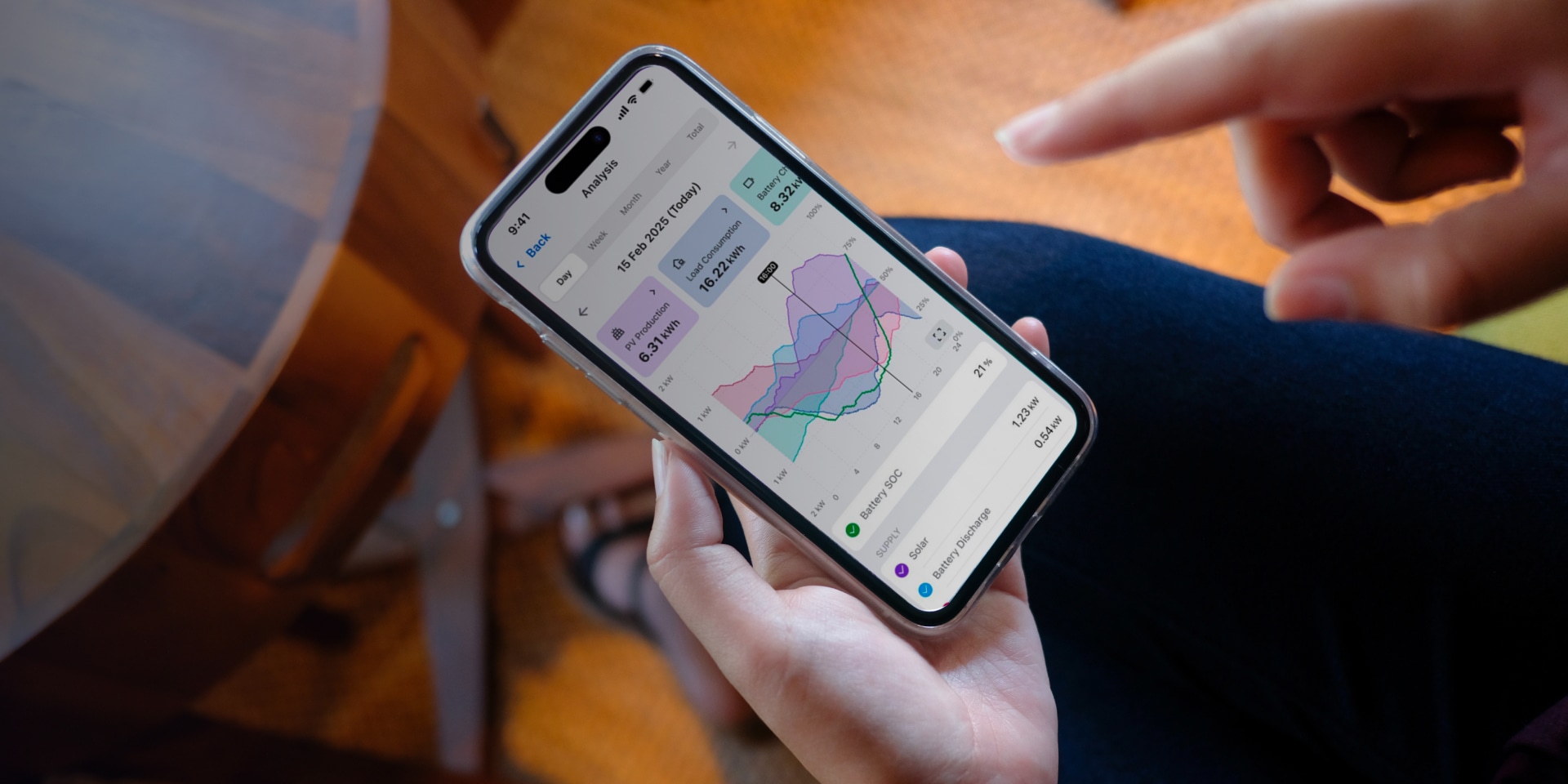
| Monitoring and scheduling | FoxCloud 2.0 brings monitoring, scheduling, and supported intelligent controls into one platform. • Live monitoring: Shows energy flows and operating status across compatible systems. • Scheduling and smart control: Supports work modes, schedules, tariff settings, and compatible intelligent controls. | Helps households adjust charging, discharge timing, and backup reserves as solar output, demand, and electricity prices change. |
The appropriate combination depends on local temperature, expected winter demand, installation conditions, and backup priorities. Households that prefer an integrated setup can consider the Fox ESS Avocado P100E, while modular Fox ESS battery and hybrid-inverter combinations provide additional flexibility for different capacity and installation requirements.
After-Sales Support for Efficient Winter Operation
Cold-weather performance also depends on having a clear route to technical support. Fox ESS maintains its own global after-sales team, with more than 270 service professionals and local service contacts across key markets.
• Technical support: Fox ESS service professionals assist with setup, commissioning, technical, and warranty questions.
• Local presence: Regional contacts provide support in local markets and languages, helping installers and homeowners reach the appropriate service team more efficiently.
• Winter troubleshooting: When cold weather affects system behaviour, technical teams can help identify whether the issue relates to operating conditions, system configuration, or product performance.
This support network helps homeowners maintain reliable winter operation while enabling installers to diagnose and resolve system questions more efficiently after installation.
Learn more about Fox ESS’s global after-sales and local support network.
Conclusion
Using a home battery effectively in winter depends less on keeping it full than on giving each kilowatt-hour a clear job. Use available solar first, charge from the grid when the electricity tariff makes sense, protect enough energy for essential loads, and review operating data as seasonal conditions change.
Fox ESS brings these priorities together through residential battery systems, compatible hybrid inverters, backup configurations, FoxCloud 2.0, and direct support from its own after-sales team. For households that prefer an integrated option, the Fox ESS Avocado P100E combines storage, power conversion, backup, and monitoring in one system. Explore Fox ESS residential battery systems and hybrid inverter solutions, or contact the Fox ESS team to plan a system around local winter temperatures, seasonal demand, electricity tariffs, and backup needs.
FAQ
Do Home Batteries Work in Winter?
Yes. A home battery can continue to operate in winter, although lower solar output and colder temperatures may change when it charges and how much energy is available. Warm-up availability is version-specific: the Fox ESS Avocado P100E is offered in heated and non-heated versions, while warm-up is optional on the Fox ESS CQ7. Check the product label and operating range for the exact battery before setting a winter schedule.[3][4][5]
Which Residential Energy Storage Systems Are Best for Winter Solar Self-Consumption?
Residential energy storage systems with solar-priority charging, household-load monitoring, configurable reserves, and clear energy-flow data are well suited to maximizing winter solar self-consumption. In a Fox ESS setup, compatible batteries and hybrid inverters work with FoxCloud 2.0 to show where available solar is going and help users store surplus generation for later use.
Which Home Battery Systems Work Well With Time-of-Use or Dynamic Tariffs in Winter?
Home battery systems with scheduled grid charging, flexible discharge windows, tariff settings, and easy schedule updates work well with time-of-use or dynamic tariffs in winter. FoxCloud 2.0 supports user-defined scheduling and tariff settings across compatible Fox ESS systems. On supported systems, AI Mode can also consider household energy habits, PV forecasts, and dynamic or time-of-use pricing. Actual savings still depend on local price differences, export rules, system settings, and storage losses.
How Can Fox ESS Help Households Prepare for Winter Outages?
Fox ESS supports winter backup through compatible battery storage, hybrid inverter solutions, EPS outputs, reserve settings, and FoxCloud 2.0 monitoring. The system should be sized around the essential circuits and the required backup duration. For households that prefer an integrated system, the Fox ESS Avocado P100E provides fast off-grid switching and short-term overload support.[3]
What Support Is Available If a Home Battery Has Problems in Winter?
Fox ESS provides direct technical and after-sales support through its own global team of more than 270 service professionals and local contacts in key markets. The team can help confirm product versions, review warm-up and operating settings, and address commissioning, technical, or warranty questions. Contact Fox ESS customer support for the appropriate local service channel.
References
[1] Energy Saving Trust. “Solar power fact check: shining a light on the truth.” Available at: https://energysavingtrust.org.uk/solar-power-facts/
[2] Energy Saving Trust. “Battery storage.” Available at: https://energysavingtrust.org.uk/advice/battery-storage/
[3] Fox ESS. Avocado P100E Energy Storage System Datasheet V1.4. Available at: https://www.fox-ess.com/Public/Uploads/uploadfile/files/20260806/ENP100EdatasheetV1.420260702.pdf
[4] Fox ESS. CQ7 Battery Datasheet V1.3. Available at: https://www.fox-ess.com/Public/Uploads/uploadfile/files/20260812/ENCQ7DatasheetV1.320260710.pdf
[5] Fox ESS. Avocado P50/P100 User Manual V1.0.0. Available at: https://www.fox-ess.com/Public/Uploads/uploadfile/files/Download/EN-Avocado-P50-P100-User-Manual-V1.0.0-20250811.pdf