










Key Takeaways
• Electrification Drives Capacity Needs: The adoption of EVs and heat pumps is fundamentally altering domestic load profiles, requiring larger system capacities and smarter load management.
• Dynamic Tariffs Require Intelligent Storage: As grid export rates change and time-of-use pricing becomes standard, integrating storage and tariff-aware controls is essential for ROI.
• Resilience Must Be Planned Early: Designing for backup power from day one prevents costly retrofits when grid instability or extreme weather strikes.
• Future-Ready Means Phased Scalability: True future-proofing is not about purchasing every component upfront, but designing a flexible architecture that supports modular upgrades over time.
• Ecosystem Integration is the Solution: Fox ESS provides a unified hardware and software ecosystem designed to seamlessly manage these market shifts.
A future-ready home energy system is designed to adapt as a household adds new electrical loads, responds to changing electricity tariffs, introduces backup power or expands its energy storage capacity. Four shifts are making this flexibility increasingly important: household electrification, time-based electricity pricing, resilience needs and phased installation.
Shift 1 – Household Electrification Is Reshaping Energy Demand
The electricity profile of a home is changing. For many households, electrification is adding both new annual consumption and new patterns of peak demand.
EVs represent the most significant new load for most households, often capable of doubling a home’s annual electricity consumption. However, EV charging is relatively flexible because it can often be scheduled for periods of high solar generation or lower electricity prices.
Heat pumps create a different challenge. Heating demand is seasonal, and electricity consumption can rise during colder periods when solar generation may be lower. This makes seasonal energy planning particularly relevant for energy-efficient homes that rely increasingly on electricity for heating.
Other loads can affect instantaneous demand. Electric water heaters, induction cooktops and air conditioning can operate alongside existing appliances, increasing simultaneous power requirements. As a result, inverter output, electrical panel capacity and circuit ratings become increasingly important design considerations.
The implication is straightforward: sizing a system only around today’s baseline consumption can create limitations when new loads are added. A future-ready design should consider where household demand is heading over the next five to ten years and accommodate future load electrification from day one.
Shift 2 – Energy Value Is Becoming More Time-Dependent
The value of electricity is increasingly influenced by when it is generated, consumed, imported or exported.
Dynamic and time-of-use tariffs can create different electricity prices at different times, while changing export arrangements can affect the value of surplus solar generation. This makes the traditional model of generating solar electricity and exporting whatever is not immediately used less relevant for some households.
For energy-efficient homes, the design question is therefore moving beyond how much solar can be generated to when that energy should be used, stored or exported.
A solar-only system may have limited ability to shift electricity between periods of different value. Adding a solar energy storage system can provide greater flexibility by storing available energy for later use, subject to the battery’s capacity, power rating and operating strategy.
Therefore, an integrated solar energy storage system is an economic prerequisite. Energy architecture must incorporate storage and tariff-aware logic as first-class design inputs, empowering energy-efficient homes to store low-cost energy and discharge during expensive windows to optimize returns.
Shift 3 – Backup Power and Energy Resilience Are Becoming More Important
As households electrify their heating, transport, and cooking, their dependence on a continuous electricity supply reaches unprecedented levels. Simultaneously, aging utility infrastructure and the rising frequency of extreme weather events are elevating grid reliability concerns for homeowners. An extended power outage may interrupt heating or cooling, home-office equipment, refrigeration, communications, EV charging, and other essential household systems.
Consequently, energy resilience is shifting from a luxury add-on to a foundational requirement for energy-efficient homes. Homeowners are increasingly demanding backup capabilities that can sustain essential loads—or even the entire home—during grid failures.
However, retrofitting backup capabilities into a conventional grid-tied system is often technically complex and economically prohibitive. That may require expensive rewiring, additional hardware isolation, or even a complete inverter replacement to add resilience later.
Therefore, for homeowners planning energy-efficient homes, planning for backup from the beginning—even when it is not immediately activated—can preserve more options for future upgrades.
Shift 4 – Future-Ready Systems Need to Support Phased Installation
Future-ready does not mean buying every energy technology available today.
For many households, a more practical approach is to install the equipment needed now while ensuring that the system architecture does not unnecessarily restrict future additions. This is particularly relevant when a homeowner expects to add an EV, heat pump, additional battery capacity or backup capability later.
Therefore, future-ready design is fundamentally about phased installation. It requires selecting core components that feature modular scalability, open communication protocols, and sufficient headroom in both hardware capability and software architecture. Physical installation space and cable routes can matter too.
By prioritizing interoperability and modularity, homeowners can confidently install a robust base system today, knowing they can seamlessly integrate an EV charger next year, and expand battery capacity the year after, without encountering technical dead ends.
How Fox ESS Is Responding to the Shift
At Fox ESS, we recognized early that the future of residential energy relies on cohesive, interconnected ecosystems rather than fragmented, standalone products. We have engineered our product portfolio to directly address the evolving demands of modern energy-efficient homes, ensuring that every component works in perfect synchronization to optimize generation, storage, and consumption.
Our designs integrate hardware and software specifically for the future-ready paradigm:
1. Hybrid Inverter
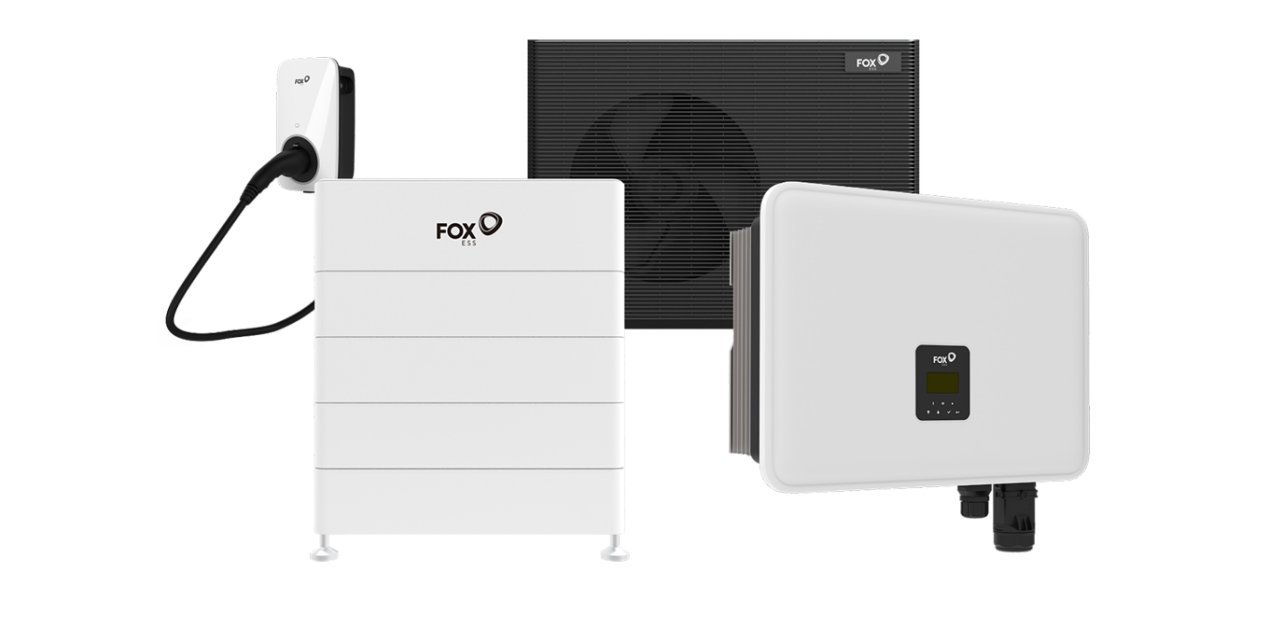
Fox ESS single-phase and three-phase hybrid inverters—including the H1, KH, and H3 series—act as the control centre of the home energy system, coordinating solar generation, battery storage, household loads, and grid interaction.
Across the range, model-specific power ratings, multiple MPPT trackers, and broad DC operating ranges support different PV layouts and household energy needs. With a compatible battery and properly configured backup circuits, selected models offer EPS switching in less than 10 milliseconds, helping keep designated essential loads powered during a grid outage.
2. Battery Storage
A battery sized for today’s household may no longer be sufficient after the home adds an EV charger, a heat pump or other high-demand electrical appliances. A future-ready battery system is therefore not simply the largest system available at the time of installation. It is a system with a clearly defined path for adding capacity as the household’s energy needs change.
Fox ESS offers different expansion approaches for different home designs. The EQ and CQ series use a vertical, stackable architecture, allowing installers to increase storage capacity by adding compatible battery modules within the supported system configuration.
For example, the EQ5500 can be configured from 10.92 to 49.14 kWh, while the CQ7 supports configurations from 13.92 to 97.44 kWh. Their stackable design also limits the additional floor space required as capacity increases.
3. EV Charger
The Fox ESS EV charger is not merely a plug; it is an active participant in the home’s energy strategy. Fully integrated with our inverter and software ecosystem, it features smart scheduling and solar-aware charging modes.
This allows homeowners to prioritize charging their vehicles using surplus self-generated solar power, minimizing reliance on the grid and avoiding peak tariff penalties.
4. Heat Pump
Heating and cooling represent the largest domestic energy drains. Our advanced heat pump solutions are deeply integrated with our energy storage systems.
Using standardized SG-Ready interfaces, Fox ESS systems communicate directly with heat pumps. During surplus solar generation or low-rate grid hours, surplus power preheats thermal buffer tanks, turning hot water storage into a cost-effective thermal battery.
5. FoxCloud 2.0
Finally, through FoxCloud 2.0, we provide a centralized management suite with real-time system monitoring, automated dynamic tariff scheduling, and remote diagnostics, ensuring energy-efficient homes operate at peak efficiency as external tariffs and internal demands change.
Conclusion
The transition from standalone solar panels to integrated residential ecosystems represents a fundamental milestone in clean energy. As household electrification accelerates, tariff dynamics evolve, and resilience becomes paramount, homeowners require systems engineered for longevity and adaptable expansion.
By combining hybrid inverters, modular batteries, EV charging, heat pumps and digital energy management, Fox ESS is working toward a more connected approach to residential energy. Discover how our integrated solutions can future-proof your residential energy projects by exploring the Fox ESS ecosystem today.


