

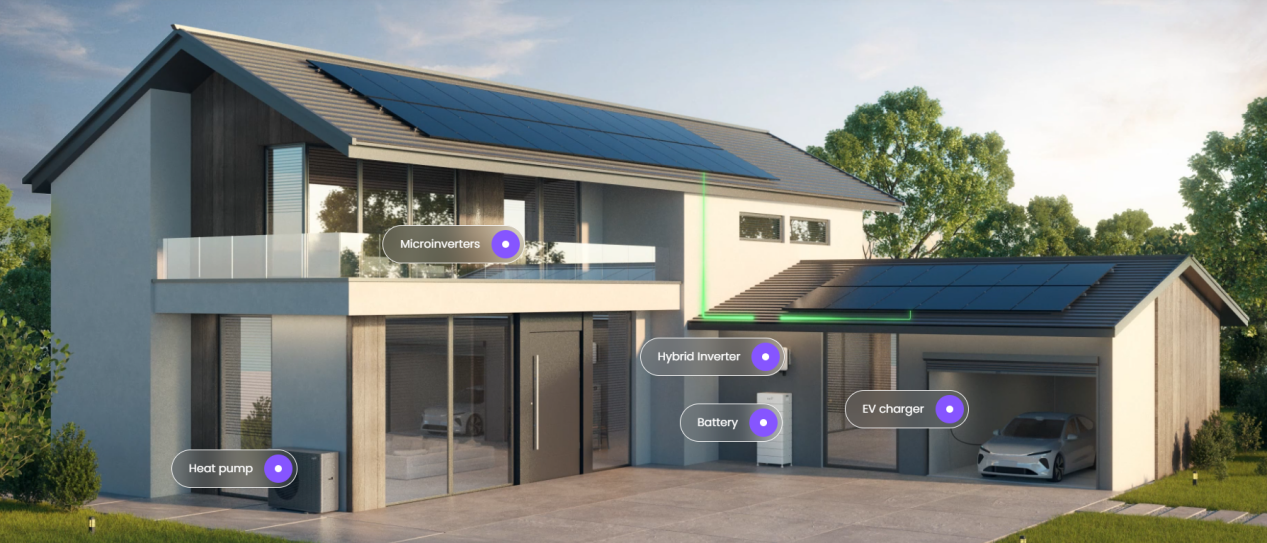








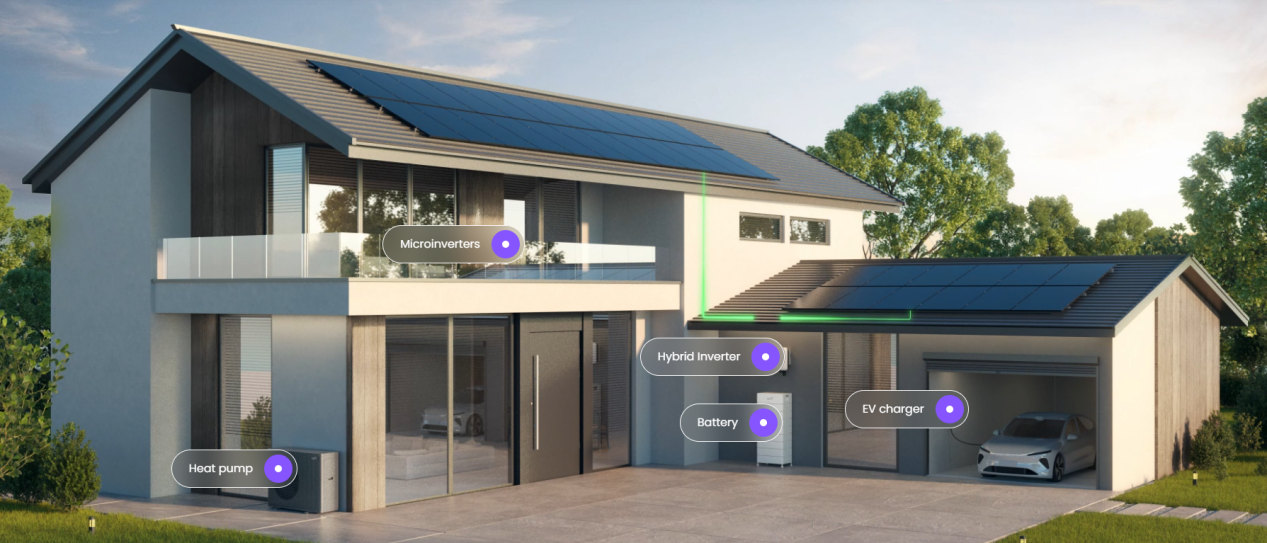
Residential electricity demand rarely stays the same. A home that initially uses solar mainly for daytime self-consumption may later add an EV charger, a heat pump, more electrical appliances, or a greater need for backup power. These changes can increase both daily energy use and peak demand.
A modular battery storage system gives installers and homeowners a practical way to prepare for changing energy needs. The initial system can be configured around current requirements while preserving an upgrade path where the selected battery, inverter, and system design support future expansion. This approach can reduce unnecessary oversizing at the beginning of a project and make long-term energy planning more practical.
Fox ESS develops high-voltage residential battery systems for a range of home energy storage applications. Its portfolio includes modular and expandable battery options designed to support different household energy requirements. Because capacity ranges, expansion methods, and compatible inverter combinations vary by product series, scalable system design should begin with accurate sizing and a clear understanding of how modular battery storage works.
What Is a Modular Battery Storage System?
A modular battery storage system uses compatible battery units that can be combined to provide different levels of usable energy.
Depending on the product architecture, capacity may be increased by:
- adding battery modules within a supported stack;
- connecting additional battery units in parallel;
- increasing the number of units within the permitted system configuration.
The battery forms part of a complete home energy system. It must work with a compatible inverter, battery management system, monitoring platform, protective equipment, and suitable installation environment. Each component can affect charging and discharging performance, backup capability, system commissioning, and the options available for future expansion.
Modularity should therefore be understood as controlled flexibility rather than unlimited expansion. The permitted number of modules, system voltage, cabling, protection, firmware, and commissioning requirements must follow the latest product documentation.
Why Scalability Matters in Residential Solar Storage
A household may begin with a relatively modest battery to increase solar self-consumption and reduce grid imports in the evening. Later, its electricity profile may change because of an EV charger, a heat pump, home electrification, changing tariffs, or a greater need for backup energy.
A scalable battery design allows the installer to size the initial system around realistic current demand rather than automatically specifying the largest available capacity. Where later expansion is supported, the homeowner has a clearer route to increase stored energy without replacing the complete system.
Scalability also helps installers adapt a common design approach to homes with different roof areas, solar generation profiles, consumption patterns, installation spaces, and backup expectations.
| Project requirement | How a modular battery system can help |
|---|---|
| Different household consumption levels | Allows capacity to be selected around measured or estimated energy use. |
| Future EV charging or heat-pump demand | Creates an upgrade path where the selected system supports additional capacity. |
| Limited initial budget | Allows the project to start with a practical configuration rather than unnecessary oversizing. |
| Backup planning | Makes it possible to evaluate stored energy separately from inverter output and critical-load requirements. |
| Installer standardisation | Supports repeatable design logic across projects while retaining model-specific configuration rules. |
How to Size a Modular Home Battery
Battery sizing should begin with the home’s energy profile rather than the maximum capacity offered by the product range. Installers should review:
- Daily electricity consumption and the proportion used outside solar-generation hours.
- The solar array’s expected production by season.
- Evening consumption, peak demand, and high-power appliances.
- The circuits that must remain available during a grid outage.
- The inverter’s continuous and backup output limits.
- Future EV charging, heat-pump, or home-electrification plans.
- Electricity tariffs, export rules, and time-of-use periods.
- Usable battery capacity rather than nominal capacity alone.
- Installation space, temperature, ventilation, access, and local safety requirements.
A larger battery does not automatically provide a better result. If annual solar production is insufficient to charge it regularly, or if the inverter cannot deliver the required backup output, adding capacity may provide limited practical value. The most appropriate system balances generation, load, usable storage, power output, operating strategy, and budget.
Can Battery Capacity Be Expanded Later?
Future expansion is one of the main advantages of a modular design, but it must be planned from the beginning. The battery series, inverter model, firmware, supported module count, system voltage, and commissioning procedure all affect whether additional capacity can be installed.
Battery age and state of health may also matter. Adding new units to an older system can require specific checks or restrictions, depending on the product. Installers should not assume that different battery families, module generations, or capacities can be mixed unless the current Fox ESS documentation explicitly permits the combination.
Before promising a future upgrade, confirm the latest datasheet, compatibility information, installation manual, warranty conditions, and local technical requirements. This gives the homeowner a realistic expansion plan rather than a general claim that the system can always grow.
How Fox ESS Supports Scalable Residential Energy Storage
Fox ESS supports scalable residential energy storage through a portfolio of high-voltage batteries, compatible hybrid inverters, energy-monitoring tools, and product configurations designed for different household requirements.
Because battery architecture, capacity range, expansion method, and inverter compatibility vary by series, the complete system should be selected according to the property’s current energy profile, installation conditions, and future electricity needs.
Battery Options for Different System Requirements
Fox ESS offers several high-voltage storage batteries, including EP, EQ, and CQ. These product lines cover different installation formats, capacity ranges, and expansion architectures rather than serving as directly interchangeable alternatives.
Selected EP models support expansion through additional battery units installed in parallel, while EQ products use a modular, stackable high-voltage architecture. CQ products provide further options for larger residential projects and other applications with higher capacity requirements.
The supported capacity, number of battery units, installation method, depth of discharge, ingress-protection rating, and compatible inverter combinations vary by model and regional product portfolio.
When selecting a battery system, users should consider inverter compatibility, required storage capacity, installation space, future expansion needs, and backup requirements.
Expansion capability and the permitted number of battery units vary by battery model and inverter combination. Always refer to the latest product documentation before expanding an existing system.
High-Voltage Design and System Compatibility
Fox ESS high-voltage battery systems are designed to operate with compatible hybrid inverters as part of an integrated residential energy system. For a given power level, a higher-voltage architecture can operate at a lower current than a lower-voltage alternative. When the system is correctly configured, this can help reduce current-related losses within a properly designed system.
Overall performance depends on the complete battery-inverter configuration, installation conditions, protection equipment, communication settings, and operating strategy. Installers should confirm that the inverter supports the selected battery model, system voltage, and permitted battery configuration.
Backup capability should also be assessed separately. Battery capacity determines the amount of stored energy available, while inverter output determines how much power can be supplied at a given time. A larger battery may extend backup duration, but it does not automatically increase the maximum power available to connected loads.
Energy Monitoring with FoxCloud 2.0
FoxCloud 2.0 provides homeowners and installers with visibility into home energy-system operation.
Through one platform, users can review:
- solar generation;
- household electricity consumption;
- battery charging and discharging;
- grid imports and exports;
- historical operating trends.
This information can help homeowners understand when solar energy is produced, stored, imported, exported, and consumed. For installers, system monitoring can support handover, performance review, and ongoing troubleshooting. Available monitoring and control functions depend on the connected Fox ESS equipment, system configuration, regional software version, and account permissions.
Global Residential Storage Market Recognition
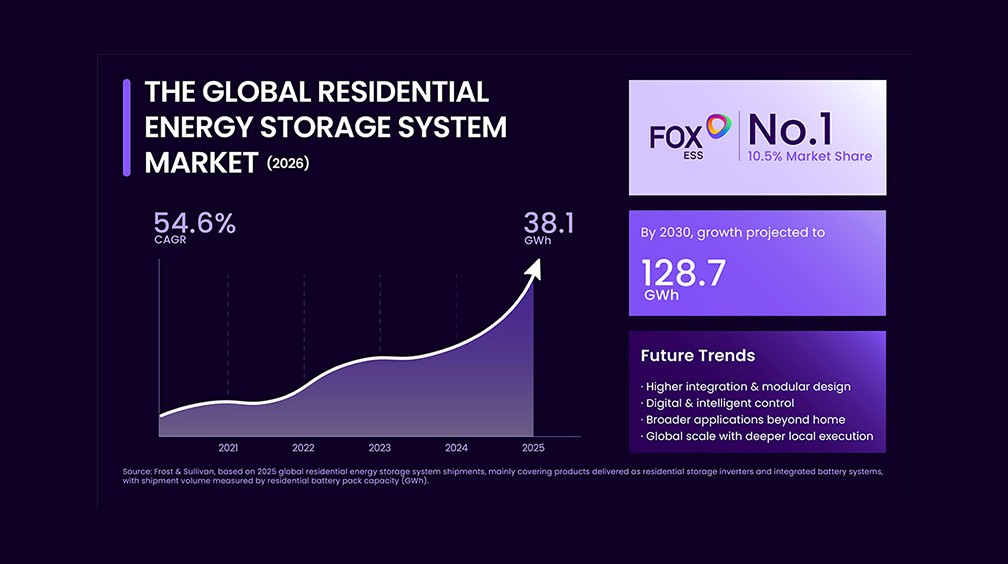
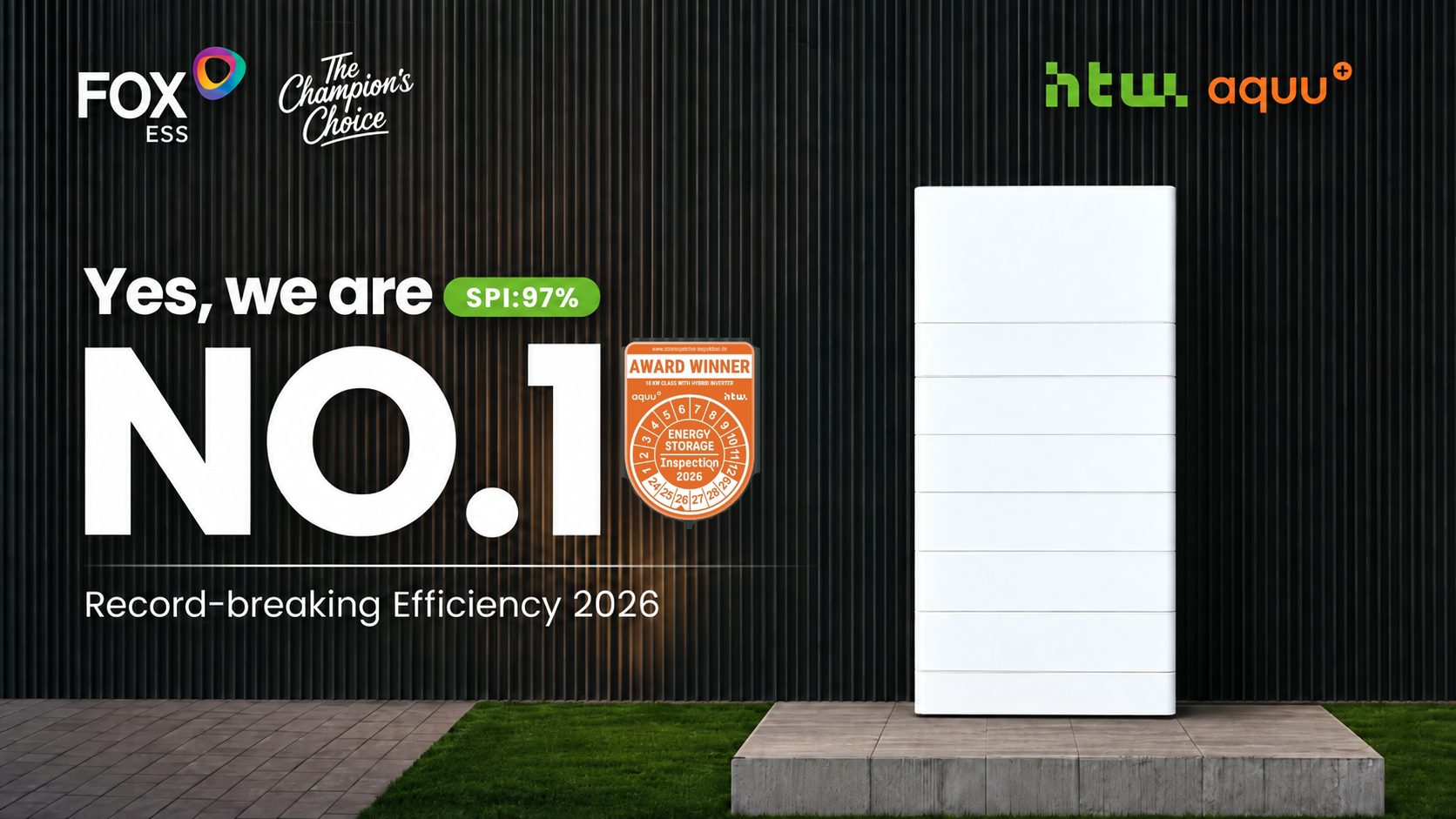
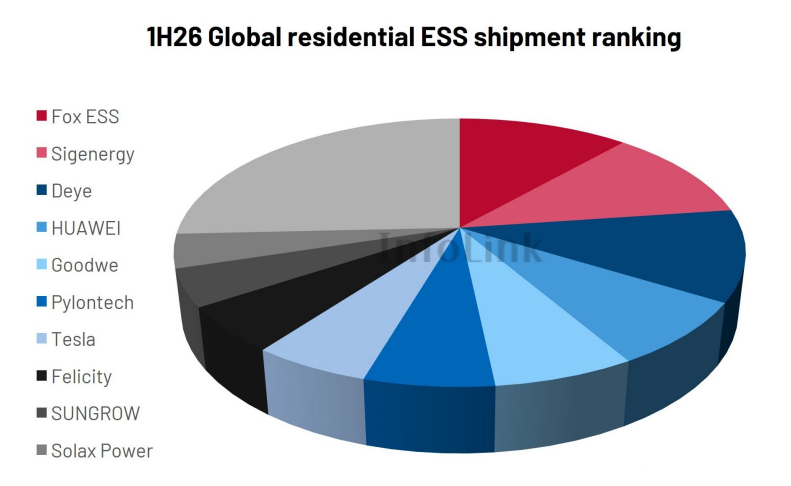
According to S&P Global Energy’s Residential Energy Storage Market Tracker, Fox ESS ranked No. 1 globally among residential energy storage providers in 2025 based on MWh shipments.1 More recently, InfoLink Consulting’s 1H26 global ESS shipment rankings also placed Fox ESS first among residential ESS suppliers. InfoLink reported that global residential ESS shipments reached 39.07 GWh in the first half of 2026, up 137.67% year on year.2
Together, these rankings provide recent third-party evidence of Fox ESS’s scale in the global residential energy storage market. This market recognition complements the company’s portfolio of modular batteries, compatible hybrid inverters, and digital energy-management tools.
Frequently Asked Questions
Can a battery be expanded after installation?
It can be expanded where the battery model, inverter, firmware, module count, and system design support additional capacity. The installer should verify the current product documentation before the initial installation and again before any upgrade.
Can different Fox ESS battery series be mixed?
Do not mix battery families, module types, or generations unless the applicable Fox ESS documentation explicitly approves that combination.
Does a larger battery provide more backup power?
A larger battery can increase potential backup duration, but backup power also depends on inverter output, reserve settings, connected circuits, and the load being supplied.
Is a modular battery always cheaper?
Not necessarily. Modularity can reduce unnecessary initial oversizing and create an upgrade path, but total cost depends on the selected products, installation, electrical work, and future expansion requirements.
How should an installer choose between EP, EQ, and CQ?
The choice should be based on required usable capacity, expansion architecture, inverter compatibility, installation environment, regional product availability, and the current datasheet for the specific model.
Conclusion
Modular battery storage can make residential energy systems easier to adapt as household demand changes. The strongest projects begin with accurate sizing, compatible equipment, realistic backup expectations, and a documented plan for future expansion.
Fox ESS provides scalable residential energy storage solutions supported by high-voltage batteries, compatible hybrid inverters, monitoring tools, product documentation, and regional service resources.
For product selection, system compatibility, or project-specific configuration questions, installers and partners can contact the Fox ESS support team for further assistance. By combining an appropriate initial capacity with verified compatibility and a practical upgrade path, installers can deliver home energy systems that meet current needs while preparing for future electrification.
References
[1] Energy Matters. Fox ESS Ranked No. 1 Globally in Residential Energy Storage for 2025. April 27, 2026. https://www.energymatters.com.au/renewable-news/fox-ess-ranked-no-1-globally-in-residential-energy-storage-for-2025/
[2] InfoLink Consulting. “1H26 Global ESS Shipment Rankings.”August 14, 2026.