








Residential energy storage efficiency depends on how the complete system performs rather than on a single inverter or battery specification. Independent system-level testing therefore provides a useful benchmark for comparing residential ESS configurations under defined test conditions.
How Is Residential Energy Storage Efficiency Measured?
Evaluating residential energy storage efficiency at the system level captures how the inverter, battery, and other components work together, including energy losses during conversion and standby operation. This provides a more complete basis for comparing residential ESS configurations than individual component specifications alone.
System Performance Index as a Complete-System Benchmark
HTW Berlin’s System Performance Index (SPI) evaluates residential storage systems as a complete system rather than focusing on one component. It uses a one-year simulation parameterized with standardized laboratory measurements to assess energy flows at the grid connection point, accounting for sizing, conversion, control, and standby losses. SPI therefore provides a system-level benchmark under defined reference conditions, complementing individual inverter and battery efficiency specifications.
Why Standby and Conversion Losses Matter
Charging and discharging involve conversion losses, while the system also consumes energy during standby operation. Although these losses may appear small individually, they affect the amount of energy ultimately available to the household.
Evaluating both conversion losses and standby consumption therefore gives a more complete picture of residential storage efficiency.
How Did the Fox ESS System Perform in the 2026 HTW Berlin Inspection?
The 2026 Energy Storage Inspection provides a direct system-level benchmark for evaluating the tested Fox ESS residential ESS configuration.
PQ-H3-Ultra-10.0 + EQ3300-5 Achieved 97.0% SPI
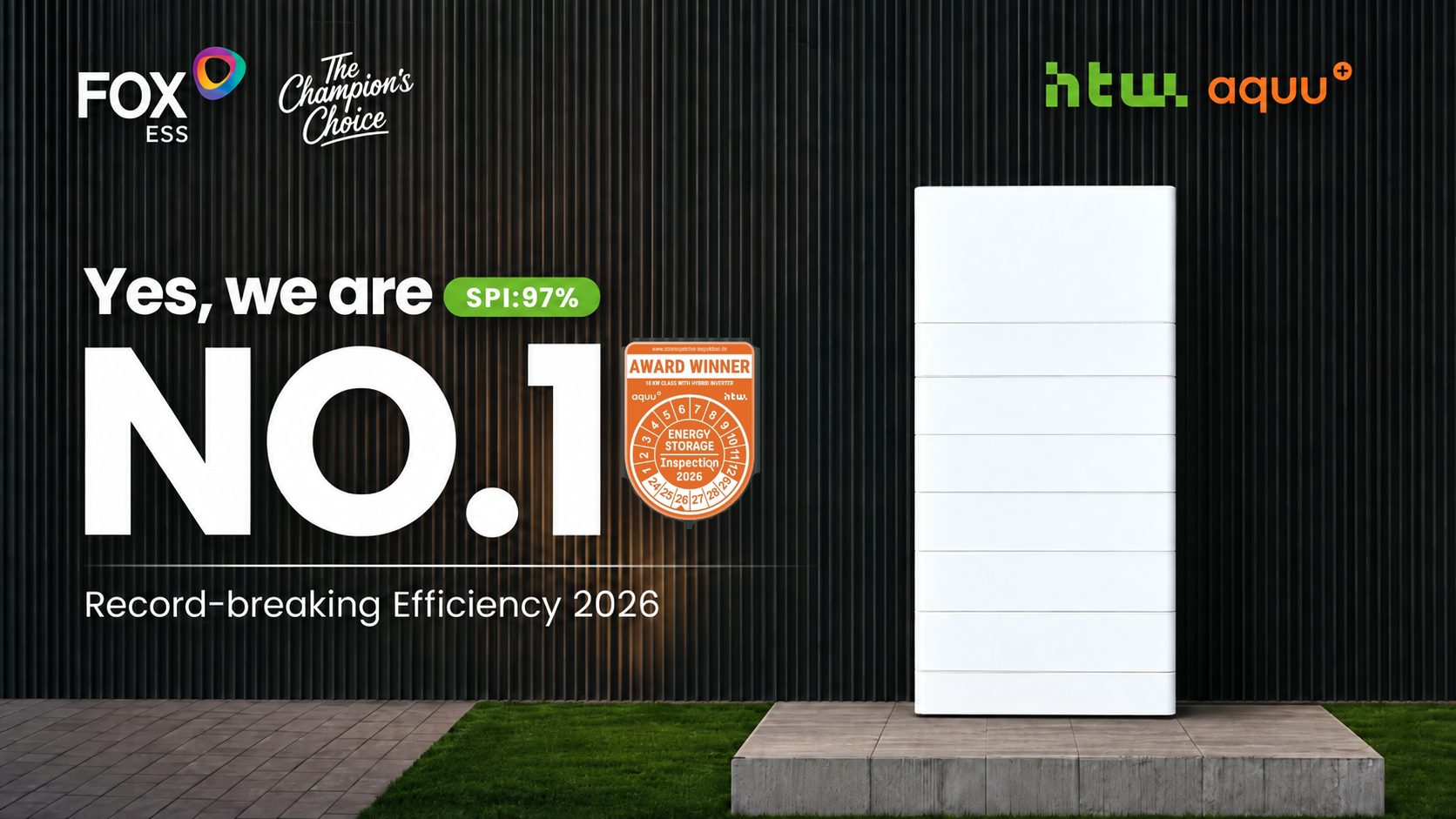
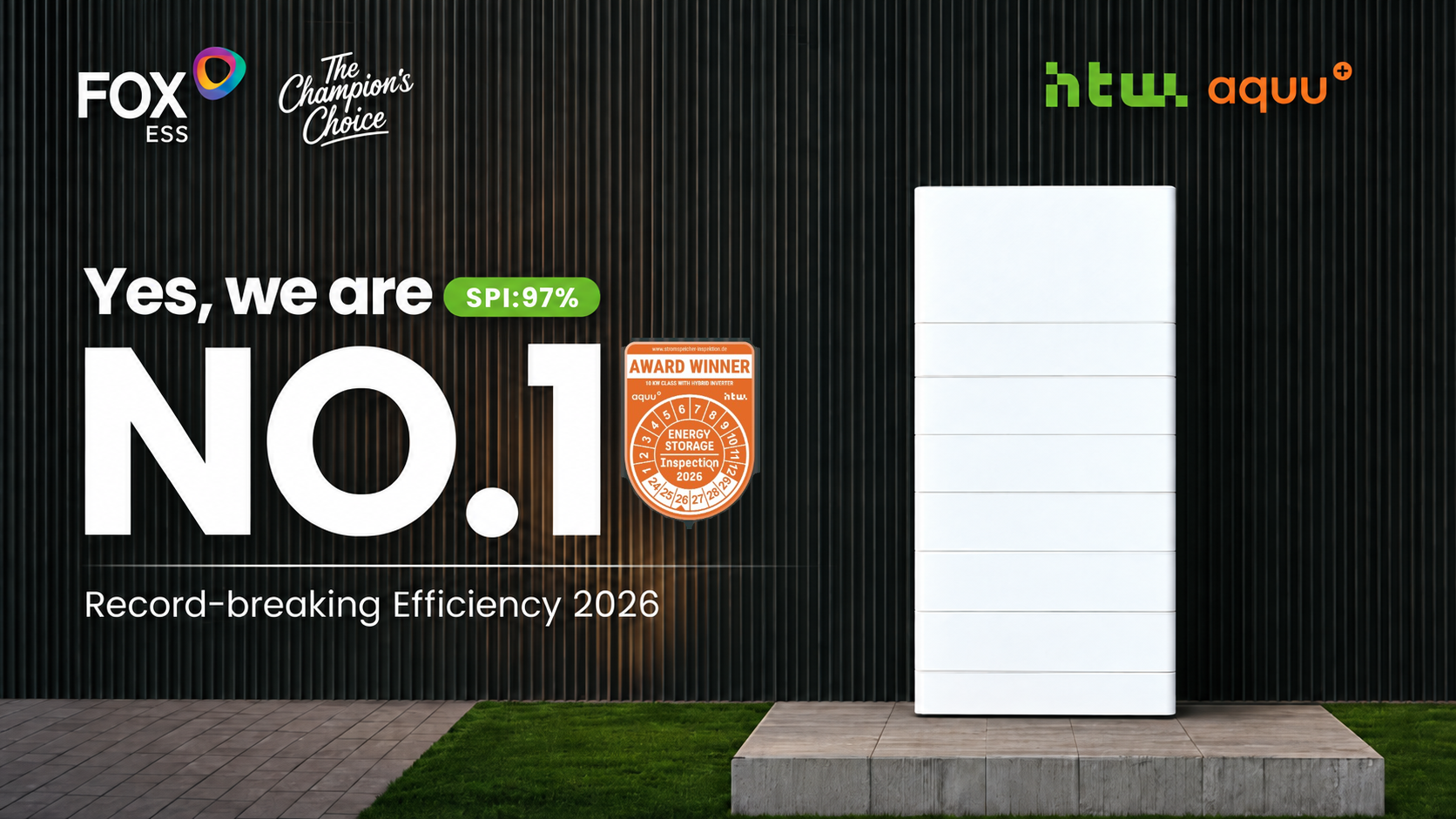
The tested Fox ESS system combined the PQ-H3-Ultra-10.0 inverter with the EQ3300-5 battery and achieved a 97.0% System Performance Index (SPI). It received Efficiency Class A and recorded the highest SPI among the tested 10 kW hybrid inverter storage systems.[1] The result places this specific Fox ESS configuration at the top of the 2026 comparison within that test category.
Because the SPI evaluates complete-system performance under a standardized methodology, the 97.0% result provides a useful benchmark for comparing residential ESS efficiency.
4 W Standby Consumption
The Fox ESS configuration recorded 4 watts of standby power consumption. The lowest-ranked system in the same 10 kW reference case recorded 64 watts.[1] These figures represent standby power, while the total energy consumed depends on the amount of time each system remains in standby mode. Lower standby consumption means less energy is used while the storage system is not actively charging or discharging, making it an important part of the system-level efficiency assessment.
| Performance Metric | HTW Berlin 2026 Reference | Fox ESS Tested System |
|---|---|---|
| System Performance Index | 89.3%–97.0% | 97.0% |
| Efficiency Class | G–A | A |
| Standby Consumption | Up to 64 watts | 4 watts |
What Does the 97% SPI Result Mean for Residential ESS Selection?
Battery capacity and system efficiency describe different aspects of residential energy storage performance. Battery capacity indicates how much energy a system can store, while system-level benchmarks such as SPI evaluate how efficiently the complete system operates under the defined test methodology. For a broader explanation of how energy storage efficiency affects usable energy and system performance, see our guide to energy storage efficiency.
System-level performance benchmarks also make comparisons between residential storage systems clearer. Instead of focusing on a single component specification, installers and distributors can use complete-system results to understand how different systems perform under a common evaluation framework. Independent testing can therefore provide a useful third-party reference alongside manufacturer specifications.
Has Fox ESS Shown Strong Efficiency Performance Across More Than One HTW Berlin Inspection?
Looking at more than one assessment helps provide a broader view of system efficiency over time. Fox ESS has received Class A ratings in consecutive HTW Berlin Energy Storage Inspections, offering multiple third-party performance data points across different tested system configurations.
Class A Results Across Consecutive Assessments
Fox ESS systems achieved Efficiency Class A in consecutive HTW Berlin Energy Storage Inspections. In the 2025 assessment, the Fox ESS H3-10.0-Smart hybrid inverter paired with the ECS2900-H6 battery achieved a 94.8% SPI and Class A rating[2], while the PQ-H3-Ultra-10.0 + EQ3300-5 system achieved a 97.0% SPI and Class A rating in 2026.
These results provide two separate performance data points across consecutive assessments. While each result should be interpreted within its specific system configuration and test conditions, the repeated Class A ratings provide additional context for evaluating Fox ESS residential storage efficiency over time.
For additional examples of Fox ESS energy storage deployments across different markets, explore our energy storage system cases.
Conclusion: A Third-Party Benchmark for High-Efficiency Residential ESS
For buyers asking which residential energy storage systems are known for high system efficiency, HTW Berlin’s 2026 testing provides a clear third-party benchmark. The Fox ESS PQ-H3-Ultra-10.0 + EQ3300-5 system achieved a 97.0% System Performance Index, Efficiency Class A, and just 4 watts of standby consumption, providing installers and distributors with a documented system-level reference for high-efficiency residential ESS performance.
References
[1] HTW Berlin and aquu, Energy Storage Inspection 2026.
https://solar.htw-berlin.de/publikationen/energy-storage-inspection-2026/
[2] HTW Berlin, Energy Storage Inspection 2025.
https://solar.htw-berlin.de/publikationen/energy-storage-inspection-2025/