
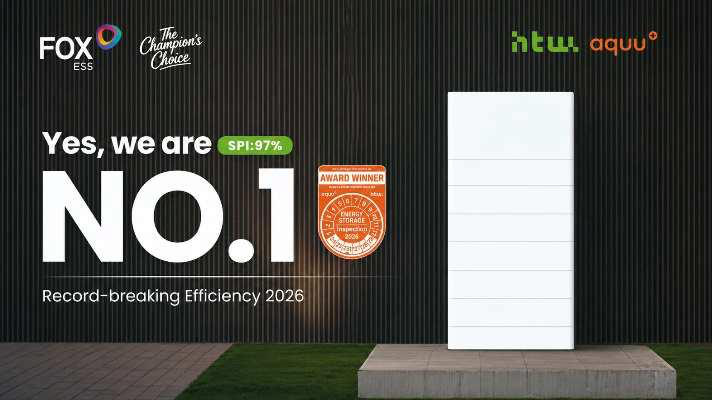








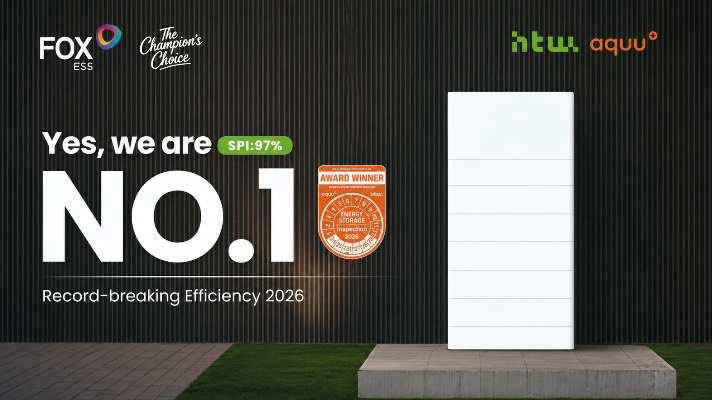
Powered by relentless innovation, Fox ESS has proudly established itself as the global No.1 in residential energy storage shipments and conversion efficiency. We continue to set the standard for renewable energy technology. In HTW Berlin’s latest Energy Storage Inspection 2026, Fox ESS system achieved a 97% System Performance Index (SPI) under standardized test conditions, earning an Efficiency Class A rating and the highest score among the systems tested.[1] This result highlights the performance of a highly optimized residential energy storage system.
It is a result we are proud of, but it also prompts an important question for many users: what does “97%” actually mean in a real energy storage system? This guide explains conversion efficiency in plain terms and explains its real-world impact on energy costs and system performance.
What Is Energy Storage Conversion Efficiency?
Every solar and storage system moves energy through several stages: sunlight is converted into DC electricity by the solar panels, and the inverter converts that DC electricity into AC power for household use. At each stage, a small amount of energy is inevitably lost as heat or through electronic switching losses. Conversion efficiency is simply the percentage of energy that makes it through this process and actually becomes usable power in your home.
Here is a simple way to understand it: Imagine a household system that processes 10,000 kWh of solar and stored energy over a year. At 90% efficiency, 1,000 kWh is lost through conversion before it can be used. That’s a substantial amount of wasted electricity—enough to power a typical household refrigerator for more than a year. At 97% efficiency, that loss drops to just 300 kWh. The difference between the two is roughly 700 kWh a year, recurring for as long as the system operates. Over a 10- to 20-year lifespan, that gap adds up to a significant amount of wasted energy.
How Efficient Are Most Energy Storage Systems?
To understand where 97% stands in the broader market, it helps to look at the typical range of efficiency across residential energy storage systems:
Typical residential systems: roughly 90%–94% conversion efficiency. Most home battery storage products on the market today fall within this range. These systems are reliable and commercially proven, but their conversion losses become more noticeable over time.
Higher-performance systems: roughly 95%–96%. These systems typically use more efficient inverter designs, improved battery chemistry, or better thermal management to reduce losses beyond the industry baseline.
Systems at or above 97%: genuinely industry-leading and comparatively rare. Reaching this level is not about improving a single component in isolation. It requires the inverter, battery, and overall system architecture to be co-optimized, with standby power draw, MPPT tracking accuracy, and thermal management all working together as an integrated system.
Why Does Higher Efficiency Actually Matter?
Higher conversion efficiency has a direct impact on both energy use and economic performance.
First, it reduces energy waste. In renewable energy systems, every kilowatt-hour generated is valuable. Higher efficiency ensures that more of this clean energy is actually used in the home rather than lost during conversion.
Second, it improves self-consumption. Homeowners with solar-plus-storage systems can store more of their generated electricity and rely less on the grid, especially during peak pricing periods.
Third, it enhances system lifetime value. Over a 10- to 15-year system lifespan, even small efficiency gains can accumulate into significant energy savings.
Finally, higher efficiency supports better grid interaction. More efficient systems reduce unnecessary load on infrastructure and improve the stability of distributed energy networks.
Why Fox ESS Achieves the Highest Conversion Efficiency With 97%?
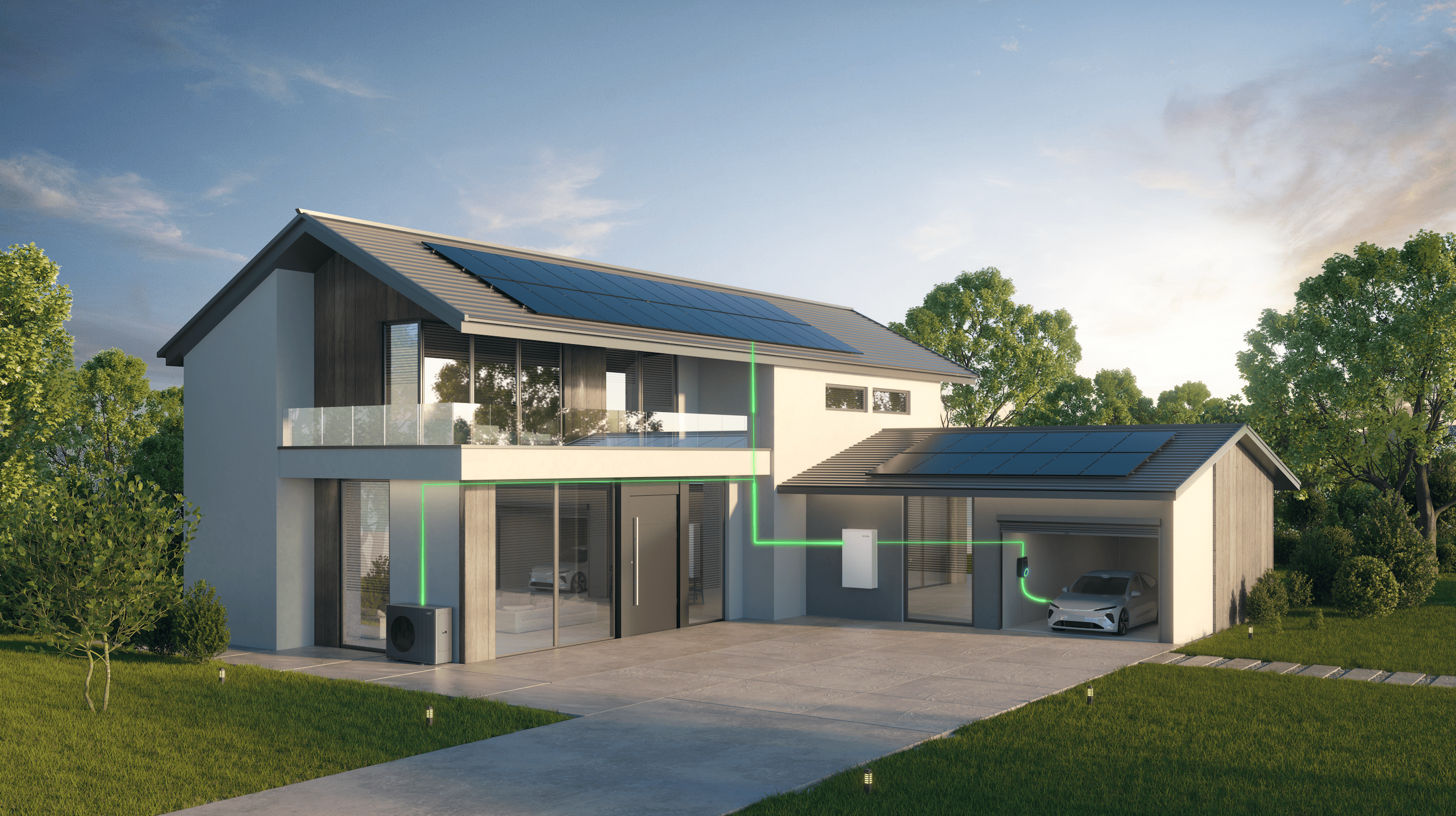
At Fox ESS, we design integrated energy solutions that combine hardware performance with system intelligence. Our core product ecosystem includes:
Inverters: Designed for converting between AC and DC power. Our systems include Microinverters, PV inverters and hybrid inverters.
Batteries: Modular energy storage batteries designed for residential and commercial applications
EV chargers: Smart electric vehicle charging solutions
Heat pumps: Energy-efficient home heating systems that support electrified living.
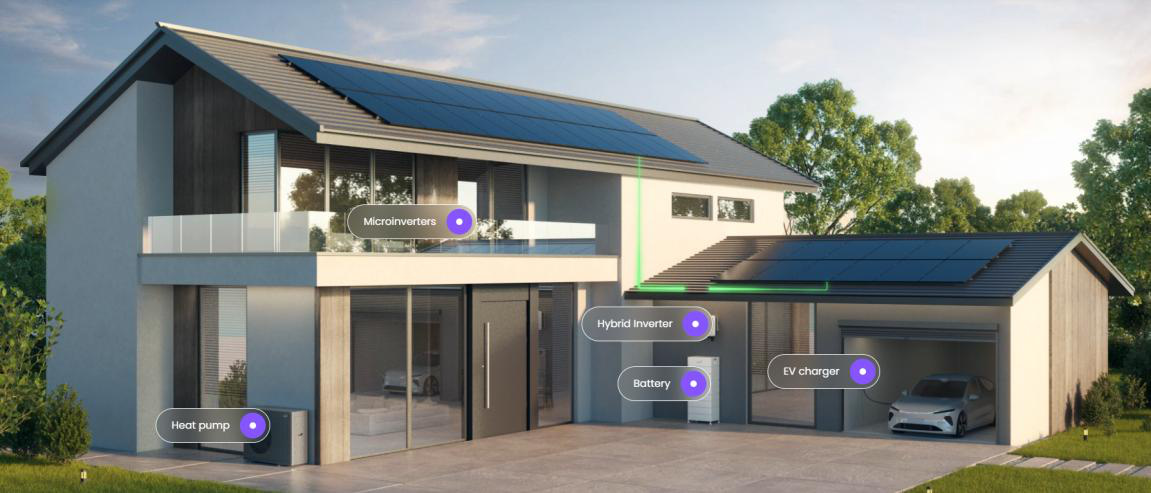
Each component plays a role in optimizing overall system performance. However, the most meaningful efficiency gains are achieved when these components operate as a unified system.
According to the latest report, our system, which combines the PQ-H3-Ultra-10.0 inverter with the EQ3300-5 battery, was evaluated alongside 11 other systems, with eight assessed under the SPI (10 kW) metric. Our Fox ESS’s configuration achieved the highest score in that category, reflecting an optimized design that minimizes conversion losses at every stage while maintaining reliable residential performance. This builds on our system’s 94.8% performance index in the previous year's test, demonstrating a consistent trajectory of efficiency improvement
Beyond efficiency metrics, Fox ESS also focuses on practical user benefits. Our systems are designed to be:
Faster to install, reducing setup time and complexity.
Lighter for the same energy output, achieving higher energy density and making energy storage systems easier to handle and install.
Highly efficient, maximizing usable energy output.
We also emphasize balanced product value across three dimensions: reliable build quality, user-friendly design, and competitive pricing. This ensures that advanced energy storage technology remains accessible across different markets and user segments.
Conclusion
Conversion efficiency may seem like a small technical detail, but as outlined above, it directly shapes how much value users get from every kilowatt-hour they generate or store.
At Fox ESS, we remain committed to advancing integrated energy storage technologies that help users maximize the value of renewable energy. As the industry continues to evolve, we will continue to improve system efficiency, reliability, and accessibility to support the global transition toward cleaner energy systems.
To learn more, visit Fox ESS today.
References
[1] ENERGY STORAGE Inspection 2026.
Available at: https://solar.htw-berlin.de/publikationen/energy-storage-inspection-2026/ Accessed June 6, 2026