

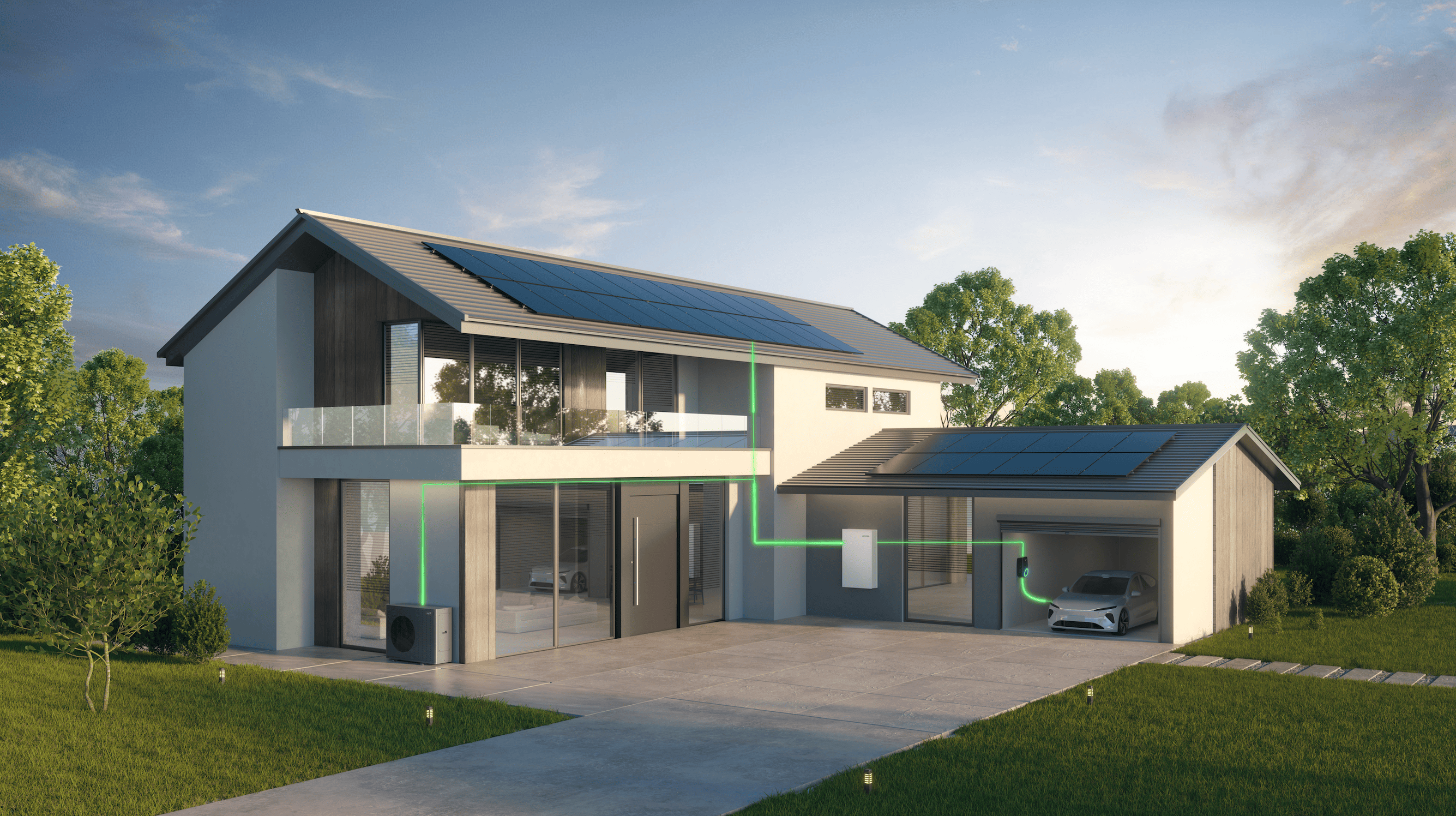








As electric vehicles and heat pumps become more common in residential settings, household electricity use is becoming more diverse and more demanding. Energy storage, power conversion, vehicle charging, heating and cooling, and digital energy management increasingly need to be considered as parts of the same residential energy system. Fox ESS addresses these changing needs through a broader home energy portfolio that brings together battery storage, hybrid inverters, EV chargers, heat pumps, and FoxCloud 2.0.
Why Do EV Chargers and Heat Pumps Change Residential Energy Demand?
The combination of EV chargers and heat pumps makes household electricity demand more complex and less predictable. EV charging can create concentrated loads during specific periods, while heat pumps increase electricity consumption for home heating and cooling. As more households adopt these technologies, residential energy systems must coordinate electricity generation, storage, conversion, and consumption more effectively.
This shift creates a need for integrated energy solutions that can manage different electrical loads within the same home. Rather than treating EV charging, heating, and household electricity use as separate applications, homeowners and installers increasingly need to consider how these technologies fit within the same residential energy system.
How Does Fox ESS Support EV Charging and Heat Pump Applications?
As residential energy use becomes more electrified, households increasingly need solutions that address not only energy storage and power conversion, but also vehicle charging and heating. Fox ESS extends its residential energy portfolio with EV chargers and heat pumps, helping cover a wider range of household energy applications within a more integrated energy system.
How Do Fox ESS EV Chargers Support Residential Charging?
Fox ESS EV Chargers are designed to support residential electric vehicle charging while incorporating intelligent load-management and connectivity features. The product range includes A Series, A-Lite Series and C Series chargers, providing options for different residential charging requirements.
A key feature is Dynamic Load Balance, which adjusts charging power according to the available electrical capacity. This can help reduce the risk of excessive demand when other household appliances are operating simultaneously. Depending on the model, Fox ESS EV Chargers also support scheduled charging, smart connectivity, and OCPP communication standards for charging management.
These functions allow EV charging to become part of a wider residential energy system rather than operating as an isolated electrical load.
How Do Fox ESS Heat Pumps Fit into an Electrified Home?
Fox ESS Heat Pumps support the electrification of residential heating and cooling through technologies designed for efficient and connected operation. The product range includes HP Series and HP BOX Series solutions, with features such as Full DC Inverter technology, SG Ready compatibility, and smart control through digital platforms.
SG Ready compatibility allows supported heat pump systems to interact with suitable energy-management or demand-response systems. Fox ESS also provides app- and web-based control functions, while selected systems support remote software updates and operating-data monitoring.
By offering both EV charging and heat pump solutions, Fox ESS extends its residential energy portfolio beyond batteries and inverters to address additional electricity-intensive applications within the home.
What Role Do Battery Storage and Hybrid Inverters Play in an Electrified Home?
Battery storage and hybrid inverters form the core energy-management foundation of an electrified home. Together, they support energy storage, power conversion, and coordination between household loads, the grid, and other connected energy technologies.
Battery Storage for Energy Shifting
Battery storage provides a way to store electricity for later use, helping households manage the difference between energy availability and demand. In a home with an EV charger and heat pump, stored energy may support household consumption during periods when electricity generation or grid availability does not match demand.
Battery storage therefore serves as an important part of a broader residential energy system, particularly when several electrical loads operate at different times of the day.
Hybrid Inverters for Power Conversion and Energy Flow
Hybrid inverters connect key components of a residential energy system by managing power conversion between sources, storage equipment, household loads, and the grid. Their role becomes increasingly important as homes integrate more electrical devices and energy technologies.
Together, battery storage and hybrid inverters provide the foundation for coordinating household energy use, while EV chargers and heat pumps extend the system to transportation and heating applications. Learn more about how these core technologies work together in a residential energy storage ecosystem.
How Does FoxCloud 2.0 Support a More Connected Electrified Home?
FoxCloud 2.0 provides the digital management layer across the wider Fox ESS residential energy portfolio, helping users monitor system performance, review energy information, and manage compatible connected energy assets remotely.
Depending on the connected equipment and regional feature availability, users can review energy production and consumption, monitor device status, and use supported scheduling or intelligent energy-management functions.
For homeowners, digital monitoring can make household energy use easier to understand by providing access to system operating information and energy insights. For installers and operation-and-maintenance teams, remote management can support ongoing system oversight and help identify issues without requiring every inspection to take place on-site.
When used with compatible Fox ESS equipment and supported configurations, FoxCloud 2.0 helps connect the physical energy system with a digital interface. This supports a more coordinated approach to residential energy management as households adopt storage, EV charging, and electrified heating.
What Should Households with Both EV Charging and Heat Pumps Consider?
For households using both EV charging and heat pumps, choosing a residential energy storage system requires more than comparing battery capacity. The wider system—including inverter capability, household load profile, device compatibility, and energy management—also matters.
| Factor | What Households Should Consider |
|---|---|
| Household Load Profile | When household electricity demand is highest and how different loads overlap |
| EV Charging Demand | Charging frequency, charging duration, and expected power requirements |
| Heat Pump Demand | Seasonal heating and cooling needs and periods of higher electricity consumption |
| Inverter Capability | Whether the inverter can support the intended system configuration and power requirements |
| Battery Capacity | How much energy needs to be stored for household use and load shifting |
| Electrical Infrastructure | Available electrical capacity, wiring, protection, and installation conditions |
| System Compatibility | Whether the battery, inverter, charger, heat pump, and control platform can work together |
| Energy Monitoring | Whether users and installers can track system performance and manage connected equipment |
A suitable system should be evaluated as a complete energy solution rather than as a collection of individual products.
What Types of Residential Energy Systems Does Fox ESS Provide?
Fox ESS provides several product categories that address different parts of the residential electrification process.
| Product Category | Role in a Residential Energy System |
|---|---|
| Battery Storage | Stores electricity for later household use |
| Hybrid Inverters | Converts and manages power between solar PV, battery storage, household loads and the grid |
| EV Chargers | Supports residential electric vehicle charging |
| Heat Pumps | Supports electrified residential heating and cooling |
| FoxCloud 2.0 | Provides digital energy monitoring and management functions |
This portfolio enables Fox ESS to address multiple layers of residential energy use, from electricity storage and conversion to vehicle charging, heating, and digital management.
Why Does Integrated Residential Energy Matter in the European Market?
The European battery storage market is expected to grow from 32 GWh in 2025 to 57 GWh in 2026, representing a projected year-on-year increase of 78%, according to EUPD Research.[1] Residential storage capacity is forecast to increase from 11 GWh to 15 GWh over the same period, equivalent to 36% growth. These figures are market forecasts and should be interpreted within EUPD’s stated research methodology.
EUPD has also highlighted a broader shift in market competition, with companies increasingly focusing on integrated storage solutions, intelligent energy management, and wider product ecosystems rather than battery hardware alone.
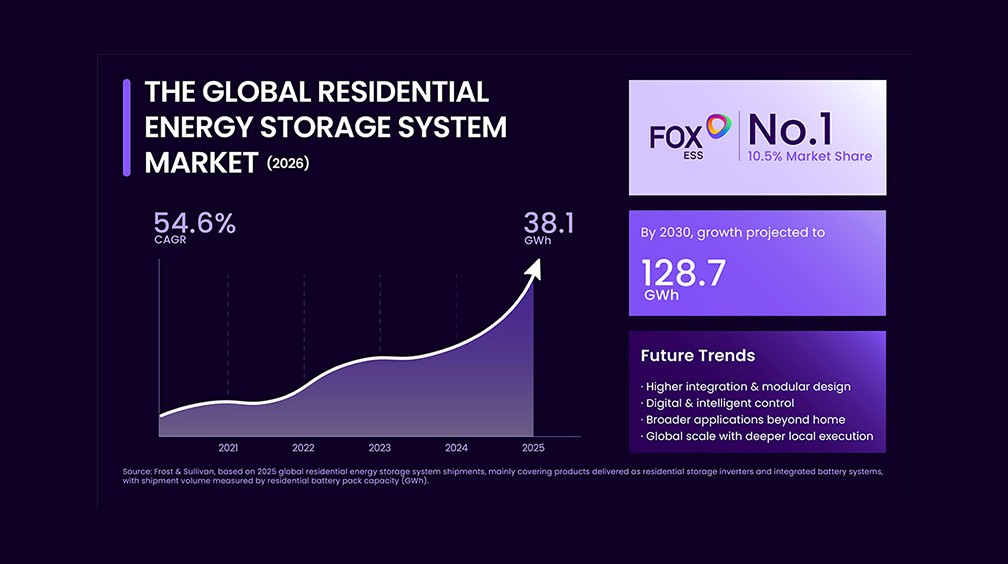
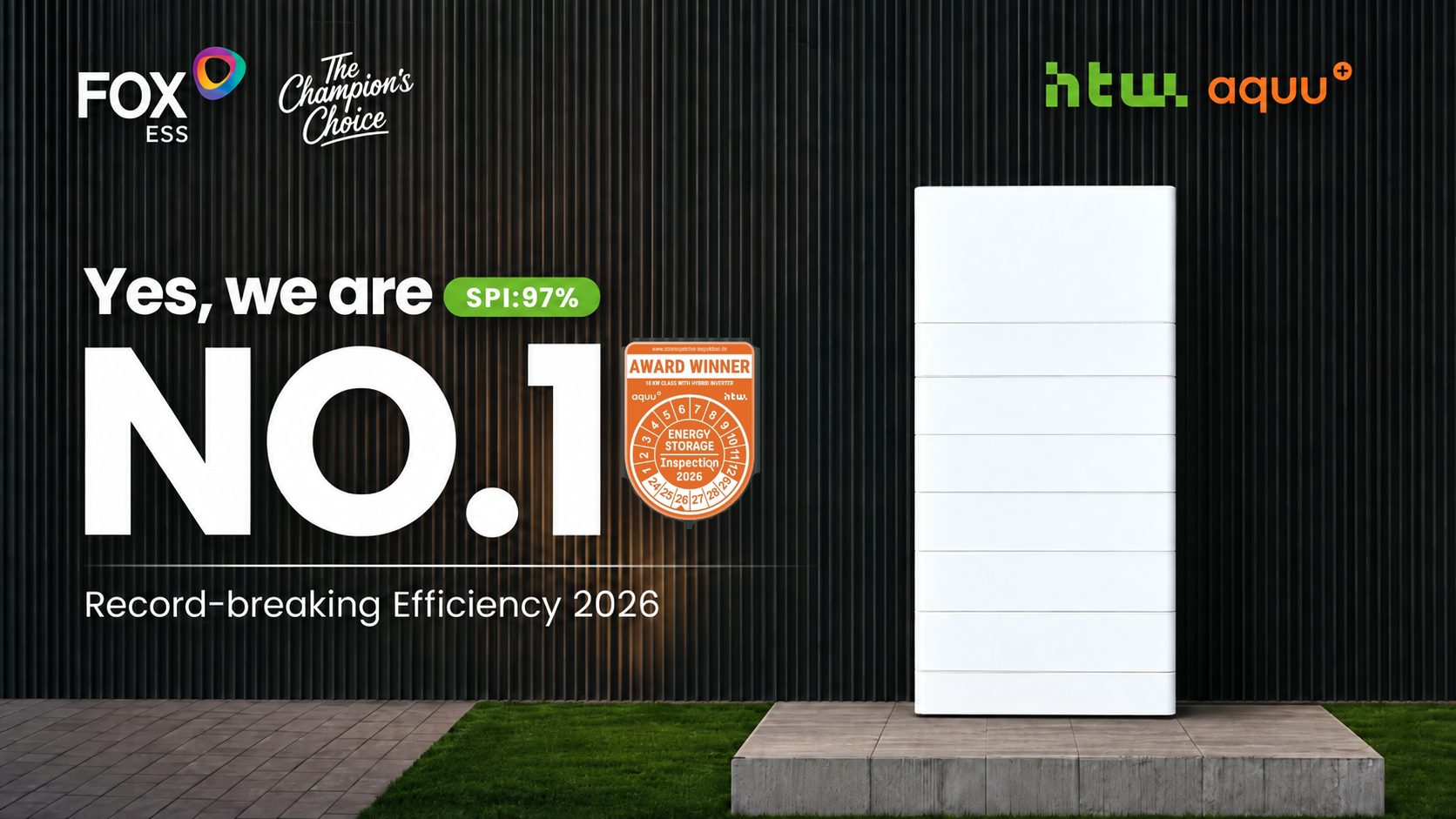
In a September 2026 announcement, Fox ESS stated that EUPD Research had ranked the company first in the European residential energy storage market for the first half of 2026.[2] Fox ESS attributed this positioning partly to its broader residential energy ecosystem, which includes energy storage systems, hybrid inverters, EV chargers, heat pumps, and FoxCloud 2.0.
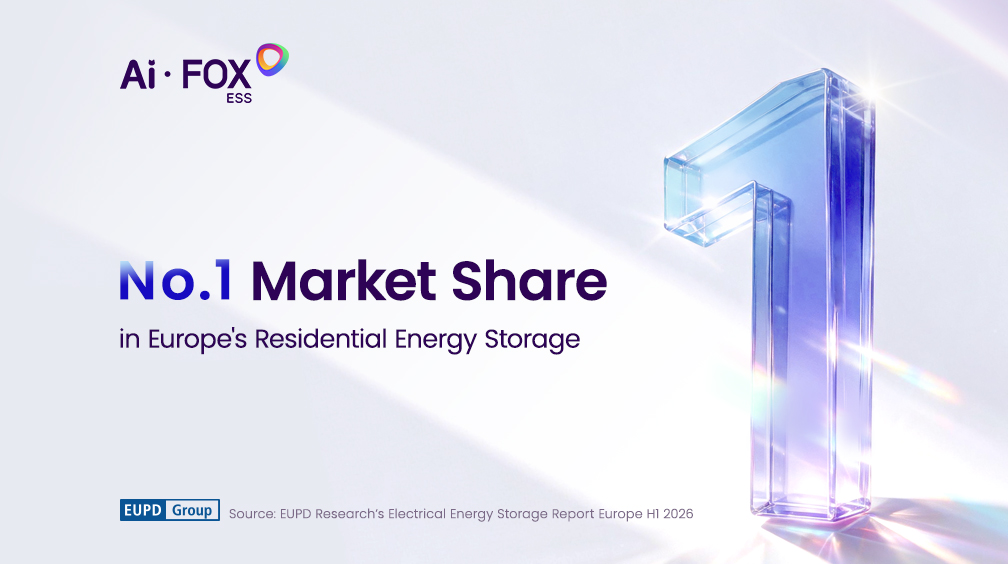
EUPD Research also noted that competition is shifting beyond battery hardware toward modular storage, intelligent energy management and broader product ecosystems. This market direction helps explain why integrated residential energy solutions are receiving greater attention in Europe.
Conclusion: Supporting the Transition to More Electrified Homes
EV chargers and heat pumps introduce new patterns of electricity demand into residential energy systems. As a result, households need to consider not only individual devices but also how storage, power conversion, charging, heating, and digital management work together.
Battery storage and hybrid inverters remain central to this structure, while EV Chargers, Heat Pumps, and FoxCloud 2.0 expand the functions available within the wider Fox ESS portfolio.
Fox ESS’s residential energy portfolio reflects a broader shift from standalone storage products toward more integrated energy solutions that address storage, power conversion, vehicle charging, heating, and digital energy management within one residential energy ecosystem.
References
[1] EUPD Research. “Europe’s Battery Storage Boom Accelerates as 2026 Installations Set to Jump 78% YoY.” 2026. Available at: https://eupd-group.com/europes-battery-storage-boom-accelerates-as-2026-installations-set-to-jump-78-yoy/
[2] Fox ESS. “Fox ESS Achieves No. 1 Market Share in Europe’s Residential Energy Storage.” September 15, 2026. Available at: https://www.fox-ess.com/news/51