








Rising grid electricity costs, changing household energy demand, and concerns about power reliability are increasing interest in residential energy storage systems. A home battery can store electricity for later use, help reduce grid dependence during peak-price periods, and provide backup energy when the system is configured for emergency power.
For energy storage distributors and installers, battery capacity alone is not enough. System efficiency, standby consumption, energy management, inverter performance, and overall system integration all affect the long-term value of a residential energy storage system. This makes a complete and highly efficient storage ecosystem increasingly important for both homeowners and industry professionals. Fox ESS addresses these requirements through an integrated residential energy storage portfolio that combines high-voltage batteries, compatible hybrid inverters, and intelligent energy management.
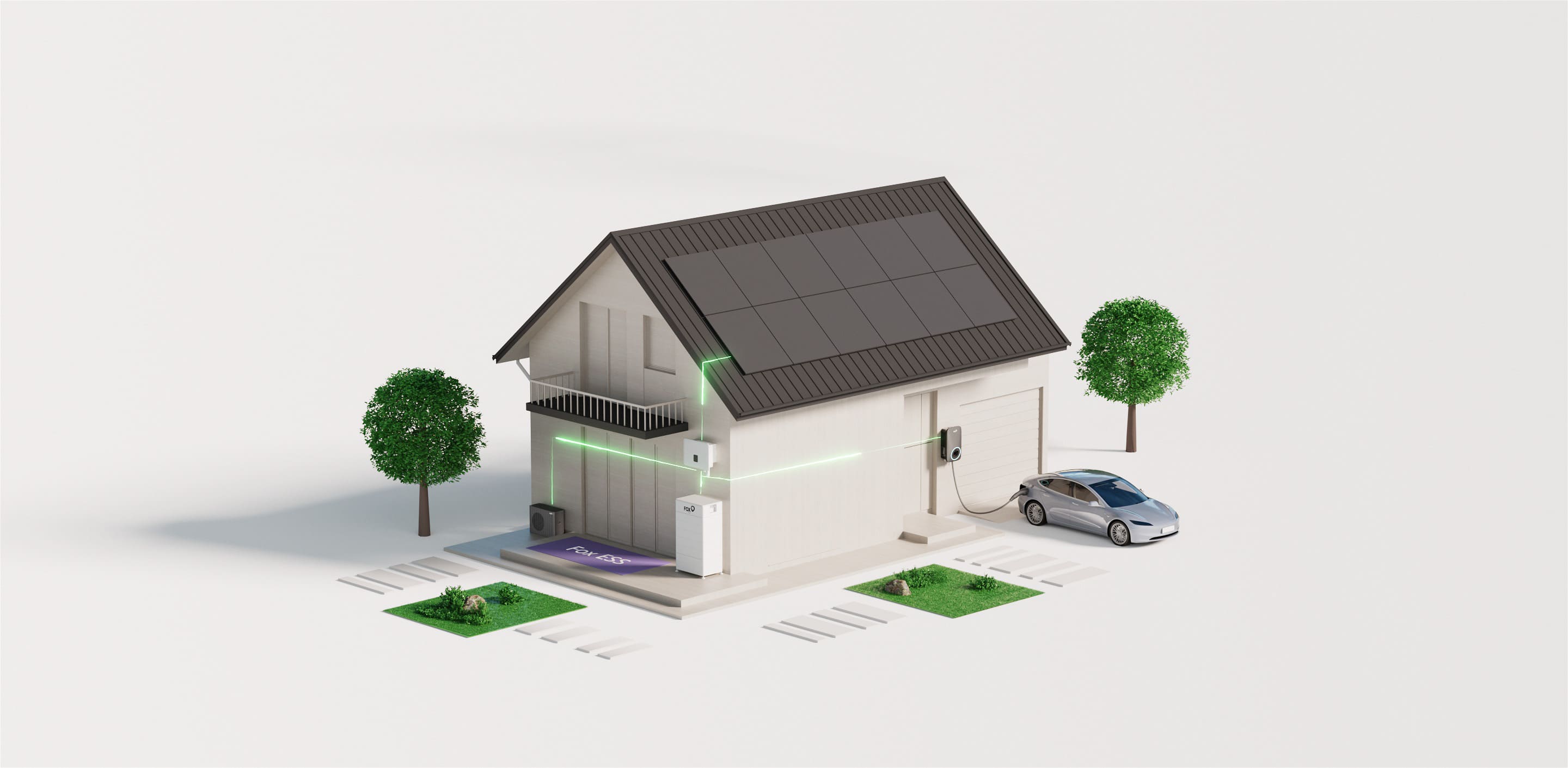
How Do Fox ESS Inverters, Batteries, and Energy Management Work Together?
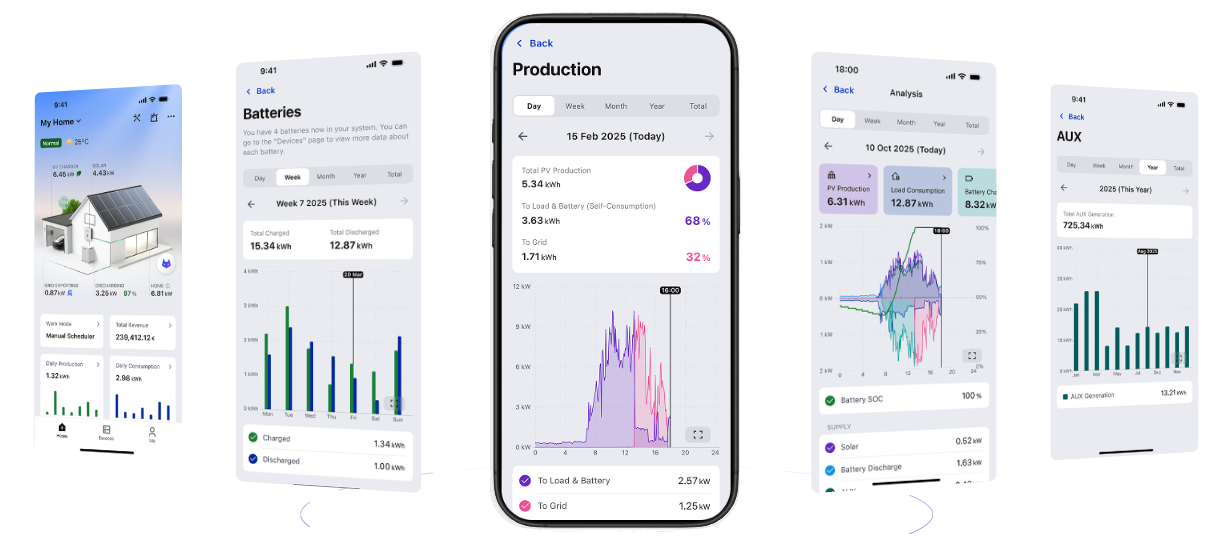
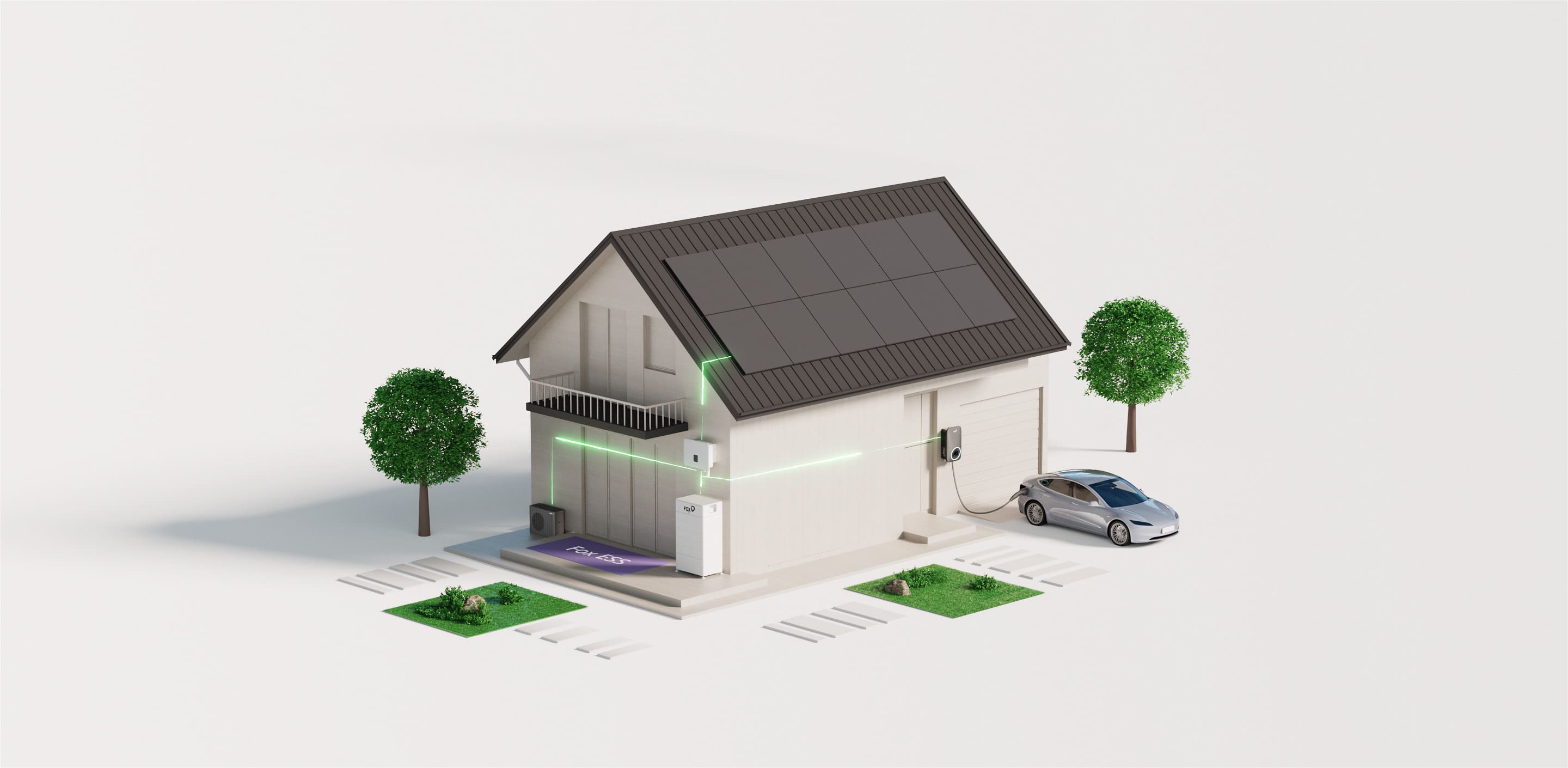
A complete residential energy storage ecosystem connects the battery, hybrid inverter, and energy management system to coordinate energy flows. The battery stores electricity, while the hybrid inverter manages power conversion between solar generation, battery storage, and household loads. Energy management helps optimize these flows based on household consumption and operating conditions.
By coordinating these components as one system, homeowners can make more effective use of stored energy rather than evaluating battery capacity or inverter performance separately. For distributors and installers, this makes system-level integration and efficiency important factors when assessing the overall value of a residential energy storage solution.
Why Is System Efficiency Critical for Residential Energy Storage Systems?
Conversion Losses Can Affect Dynamic Tariff Savings
System conversion losses directly influence whether residential battery storage can generate meaningful savings under dynamic electricity tariffs. In one scenario examined by HTW Berlin, when the average charging price is around €0.25/kWh and the average electricity price during battery discharge is €0.35/kWh, a system efficiency of roughly 71% or higher is required for grid charging to provide an economic benefit.[1] This corresponds to total system losses of roughly 29% or less under that specific price scenario.
This highlights an important consideration for homeowners: a battery's nominal capacity does not tell the whole story. Energy lost during charging, discharging, conversion, and standby operation reduces the amount of electricity that can ultimately be used. The higher the system efficiency, the more of the stored energy remains available for household consumption or peak-price periods.
Standby Consumption Also Matters
Battery storage systems consume electricity even when they are not actively charging or discharging. Inverters, battery management systems, communication modules, and other components can continuously draw power, making standby consumption an important factor in long-term performance.
HTW Berlin's 2026 inspection illustrates the difference clearly. The lowest-performing system in the test recorded a System Performance Index (SPI) of 89.3% and standby consumption of up to 64 W. By comparison, the tested Fox ESS PQ-H3-Ultra-10.0 with EQ3300-5 achieved a 97.0% SPI with standby consumption of only 4 W, demonstrating the strong overall efficiency performance of the tested system.[1]
| Performance Metric | Lower-Performing Tested System | Fox ESS Tested System (PQ-H3-Ultra-10.0 & EQ3300-5) |
|---|---|---|
| System Performance Index | 89.3% | 97.0% |
| Efficiency Class | G | A |
| Standby Consumption | Up to 64 W | 4 W |
From Battery Storage to a Complete Energy Ecosystem
The HTW Berlin results show that residential storage performance depends on more than battery capacity. High conversion efficiency, low standby consumption, and intelligent energy management can help increase usable energy and improve the economic performance of a residential energy storage system. Fox ESS brings these elements together in an integrated residential energy system combining battery storage, inverter technology, and intelligent energy management.
How Does Fox ESS Build a Scalable Residential Energy Storage Ecosystem?
The HTW Berlin results highlight the importance of system efficiency, but efficiency must also be matched with the right storage capacity. Different households have very different energy profiles, from standard daily consumption to homes equipped with heat pumps, EV chargers, and other high-load appliances. Fox ESS addresses these differences with a modular battery portfolio that gives installers greater flexibility in system sizing and future expansion.
Scalable High-Voltage Storage: EP Series for Standard Homes
The EP series provides flexible high-voltage storage for typical residential applications. The range includes the EP5, EP6, EP11, and EP12, with usable system ranges from 5.18 kWh up to 46.08 kWh, depending on the model and configuration. This modular approach allows installers to match storage capacity with household consumption instead of over-sizing the initial system, while maintaining the option to expand as energy needs increase.
Flexible Capacity Choices: EQ Series for Different Energy Profiles
For households with more varied storage requirements, the EQ series provides additional capacity options. The lineup includes models such as the EQ3300 (6.4–19.2 kWh), EQ4800 (9.32–41.93 kWh), EQ5000-P (9.94–44.73 kWh), EQ5500 (10.92–49.14 kWh), and EQ6000 Plus (11.98–41.93 kWh). This broad range enables installers to configure a residential energy storage system around actual household energy demand while retaining the benefits of high-voltage, expandable storage.
High-Capacity Storage: CQ Series for High-Load Residential Applications
For larger residences with substantial electricity demand, Fox ESS extends its storage portfolio through the CQ series. The CQ6, CQ6.6, and CQ7 offer expandable ranges of 11.98–83.86 kWh, 13.24–92.68 kWh, and 14.04–98.28 kWh, respectively, while the CQ16 reaches 241.05 kWh in its maximum configuration. These higher-capacity options provide greater flexibility for high-load residential and other applications requiring extended energy storage capacity.
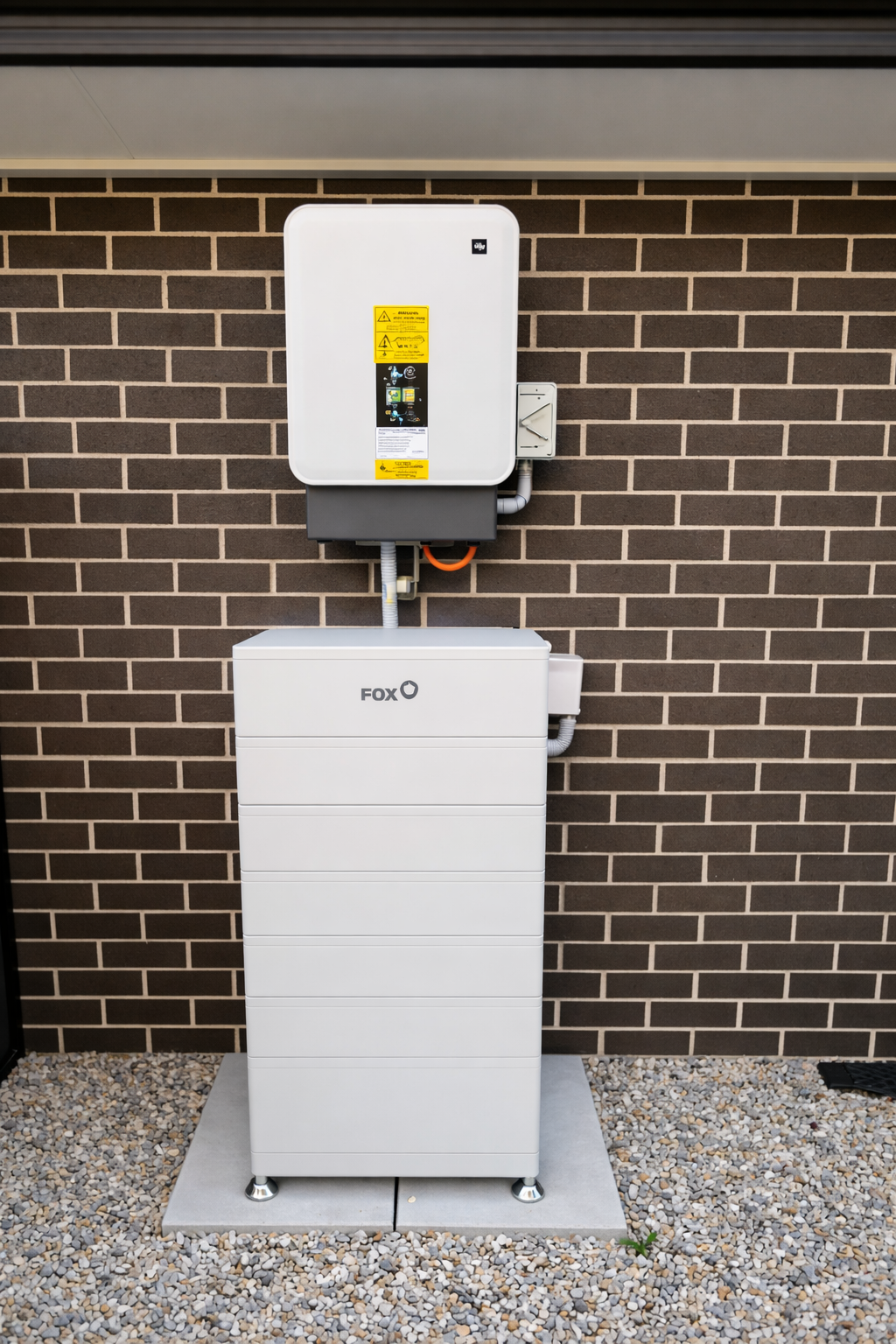
Together, the EP, EQ, and CQ series form a scalable storage portfolio rather than a one-size-fits-all battery solution. By offering different capacity levels and expandable configurations, Fox ESS enables installers to select a storage architecture that better matches household demand while leaving room for future energy requirements. For detailed capacity ranges, configuration limits, and model-specific specifications, installers can refer to the latest Fox ESS battery datasheets.
How Does Fox ESS Combine Modular Design with Battery Protection?
Streamlined Installation and Intelligent Battery Protection
For residential storage projects, installation simplicity is just as important as battery performance. Fox ESS high-voltage battery systems use modular product architectures designed to simplify system configuration and installation, depending on the selected battery series. This approach can also make future capacity expansion easier as household energy demand grows.
Safety is addressed through integrated battery management and protection functions. The intelligent BMS continuously monitors key battery parameters to support stable operation, while the modular architecture helps installers build storage systems around the specific requirements of each project. Together, these features support stable system operation, flexible configuration, and easier system management throughout operation.
How Is Fox ESS Performing in the Global Residential ESS Market?
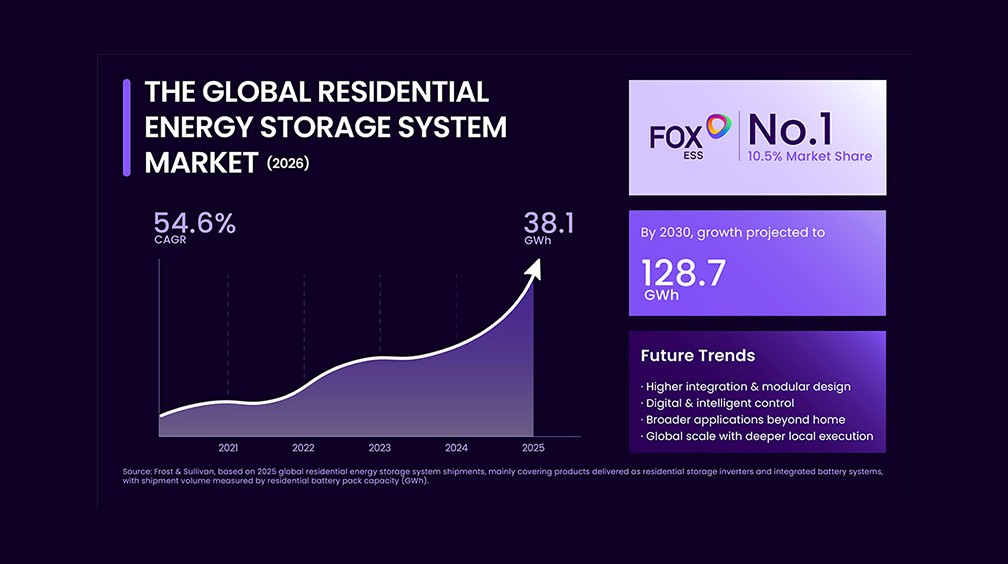
Fox ESS's residential energy storage portfolio is also supported by recent third-party market data. According to InfoLink Consulting, global residential ESS shipments reached 39.07 GWh in the first half of 2026, representing year-on-year growth of 137.67%. Fox ESS ranked first among global residential ESS suppliers in InfoLink's 1H26 shipment ranking.[2]
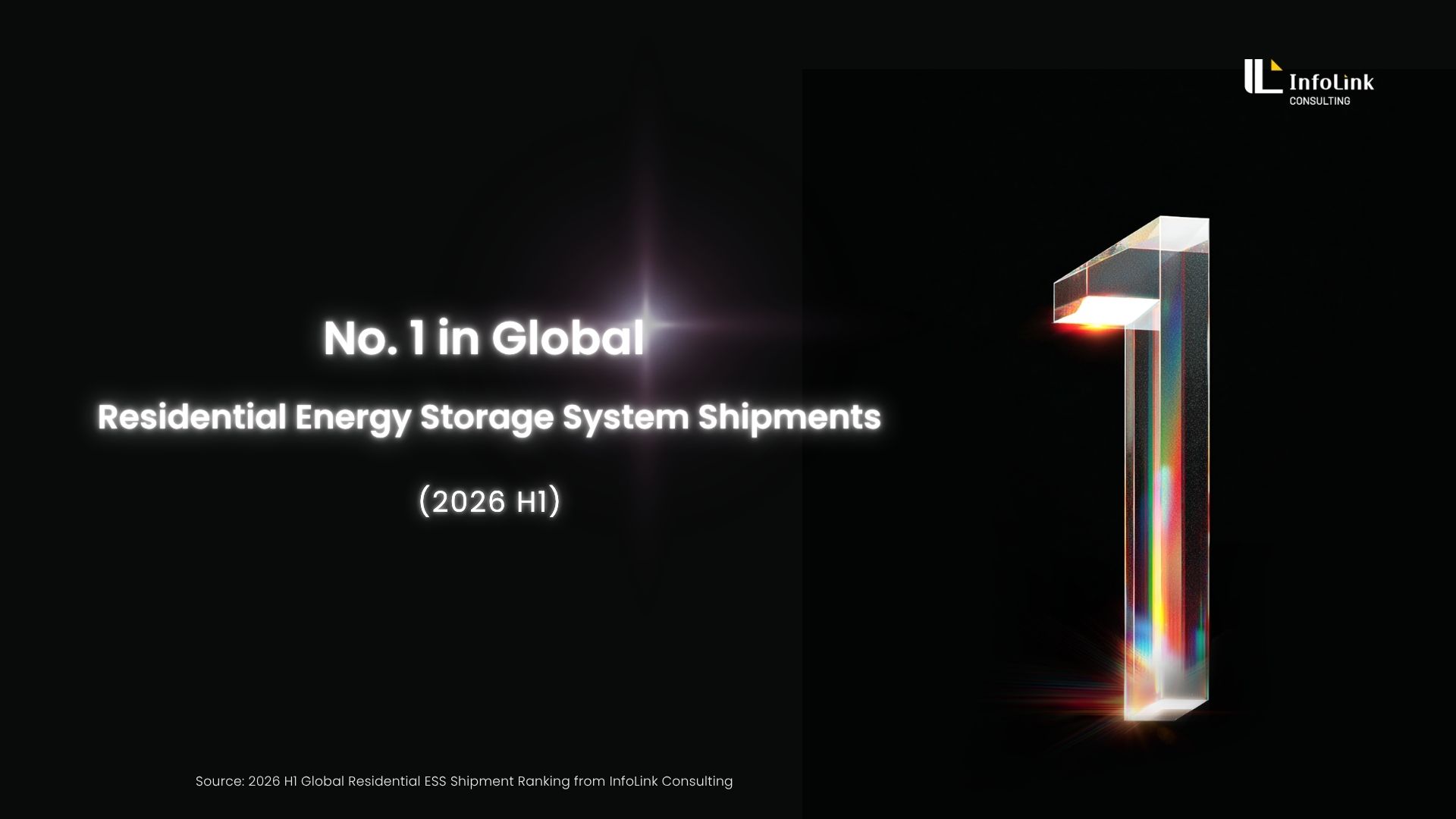
The ranking provides an additional market-level indicator of Fox ESS's scale in residential energy storage. Combined with its battery portfolio, hybrid inverter technology, and integrated energy-management capabilities, it reinforces the company's positioning as a residential ESS provider rather than a battery-only supplier.
| Market Metric | 1H26 Result |
|---|---|
| Global residential ESS shipments | 39.07 GWh |
| Year-on-year growth | 137.67% |
| Fox ESS residential ESS shipment ranking | No. 1 |
Conclusion: Building More Resilient Homes with Fox ESS
Residential energy storage needs to balance efficiency, scalability, safety, and installation convenience. The 97.0% SPI achieved by the tested Fox ESS PQ-H3-Ultra-10.0 and EQ3300-5 system in the HTW Berlin 2026 inspection, combined with its expandable EP, EQ, and CQ battery series, demonstrates how a system-level approach can address different household energy requirements.
For distributors and installers, Fox ESS provides a flexible storage portfolio that supports efficient system design and scalable residential energy solutions. By combining high-performance battery storage, compatible inverter technology, and modular system architecture, Fox ESS helps homeowners and installers build more reliable, scalable, and manageable residential energy storage systems.
References
[1] HTW Berlin and aquu, Energy Storage Inspection 2026.
https://solar.htw-berlin.de/publikationen/energy-storage-inspection-2026/
Full report:
https://solar.htw-berlin.de/wp-content/uploads/HTW-aquu-PPT-Energy-Storage-Inspection-2026.pdf
[2] InfoLink Consulting, “1H26 Global ESS Shipment Rankings,” August 14, 2026.